Power distribution
Power only helps if it gets safely and neatly to the places that need it. We hire the boards, cable and cable ramps that link generators to stages, catering areas, bars, marquees, site cabins and temporary work areas.
What power distribution covers
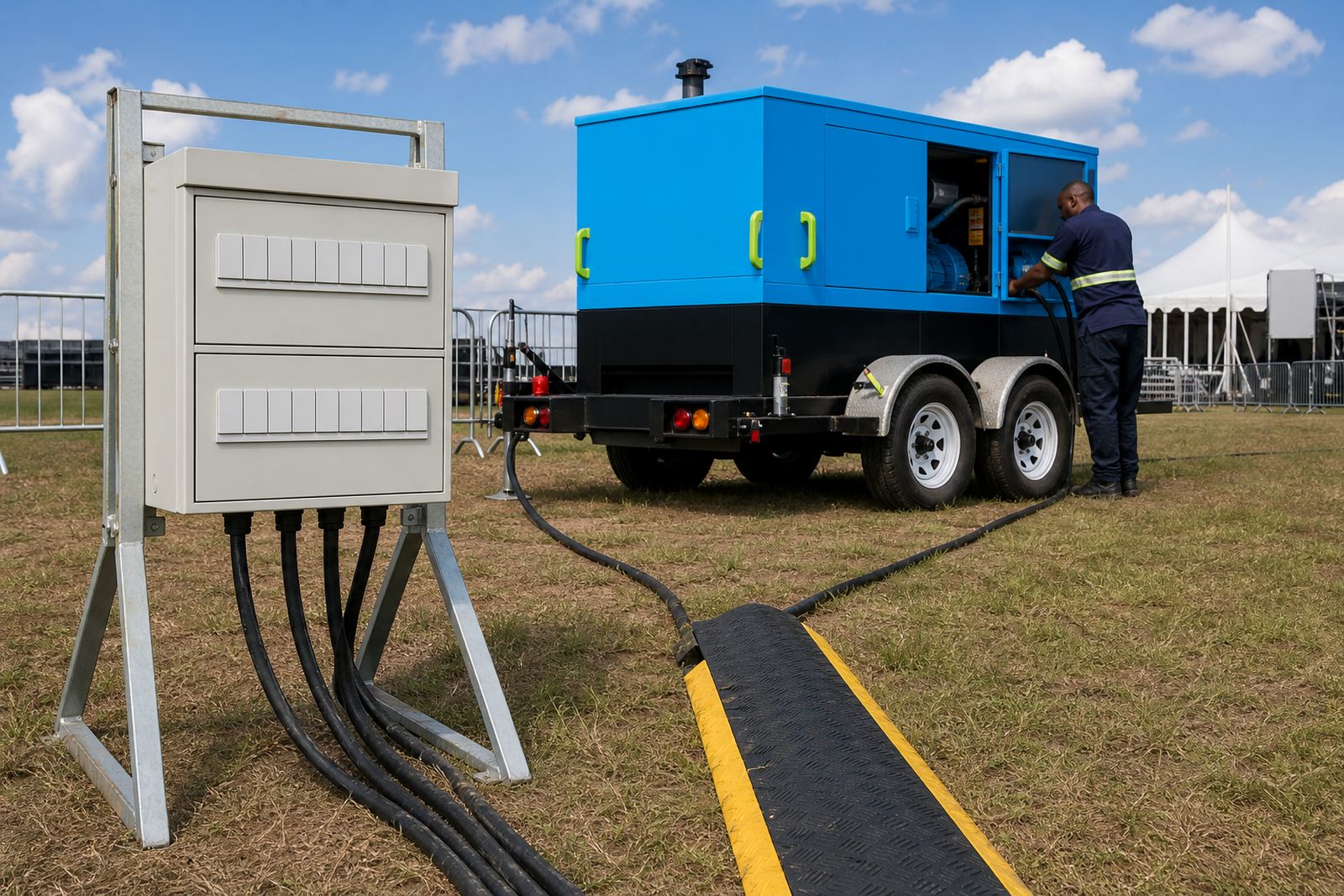
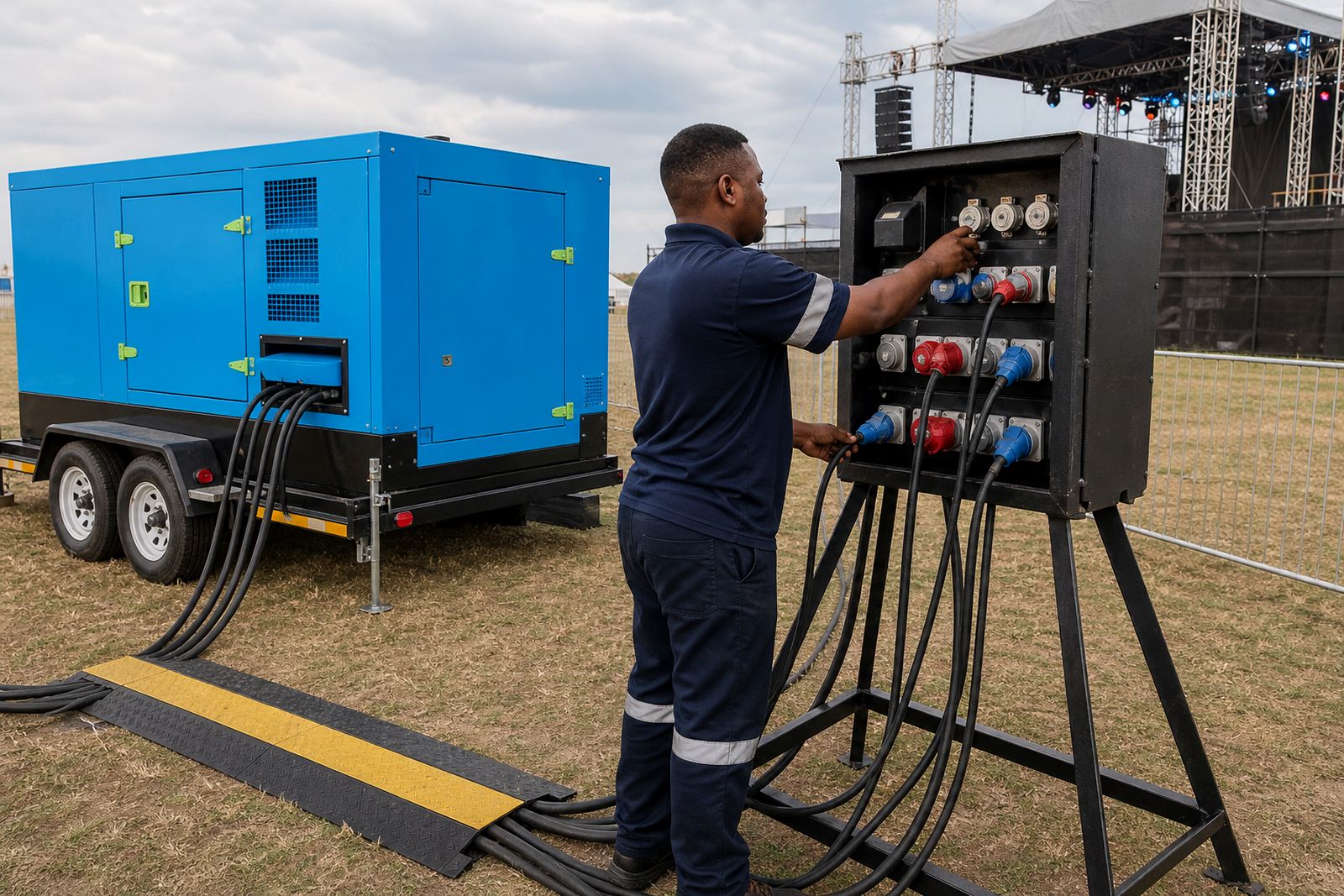
Power distribution is the temporary equipment that takes supply from a generator and splits it into usable outlets for different parts of an event or site. That usually means a main distribution board near the generator, smaller boards closer to where power is used, and the right cable runs between them.
At Reliable-Generator Hire in Kempton Park, we supply distribution equipment as part of a complete temporary power hire service. Our crew delivers, places, connects and collects the equipment, and we help you plan the layout before the event or job starts. This is useful on open fields, sports grounds, wedding venues, parking areas, building sites and film locations where power points are limited or too far away.
We do not do permanent electrical installation or sell equipment. The focus is temporary event and site supply that can be removed cleanly once your hire ends.
Choosing between board types
The right board depends on the size of the load, how many separate circuits you need, and how spread out the venue is. A small wedding with catering, basic lighting and a DJ setup needs a different layout from a food market or concert with several vendors and technical areas.
- Main distribution boards: Used near the generator to divide power into separate outgoing circuits for different zones.
- Mobile distribution boards: Placed closer to end users such as bars, prep tents, sound positions or site cabins.
- Single area boards: Handy where one section needs its own managed supply, for example a catering line or registration area.
- Multi-zone layouts: Better for larger events where stage, vendor, lighting and back-of-house power should be kept separate.
If you are not sure what mix is needed, we work from your equipment list and site plan to suggest a practical layout. In many cases one larger board with long cable runs is less tidy than a staged layout using a main board plus smaller downstream boards, and it can make fault finding easier on the day.
Cable lengths and routing on site
Cable choice is not only about reaching the distance. Long runs affect where voltage drop, trip risk and vehicle access become concerns, so cable routing should be planned with the venue map in mind. On grass or open ground, cable can often follow fencing, marquee edges or rear service lanes to keep public areas clear.
For urban venues and busy event sites in Gauteng, neat routing matters because crew, guests, service vehicles and suppliers may all be moving at once. On building and film sites, cable often needs to avoid wet areas, access routes and places where plant will cross. Our crew helps place cable sensibly, but the final route must suit the actual conditions on the day.
- Short runs are useful where the generator can sit close to the load without noise or access problems.
- Longer runs help keep the generator away from guest areas, camera positions or sleeping accommodation.
- Separate cable routes can reduce congestion between stage, catering and trader supply.
- Clear labelling and tidy coiling around boards saves time during set-up and breakdown.
When cable ramps are the better option
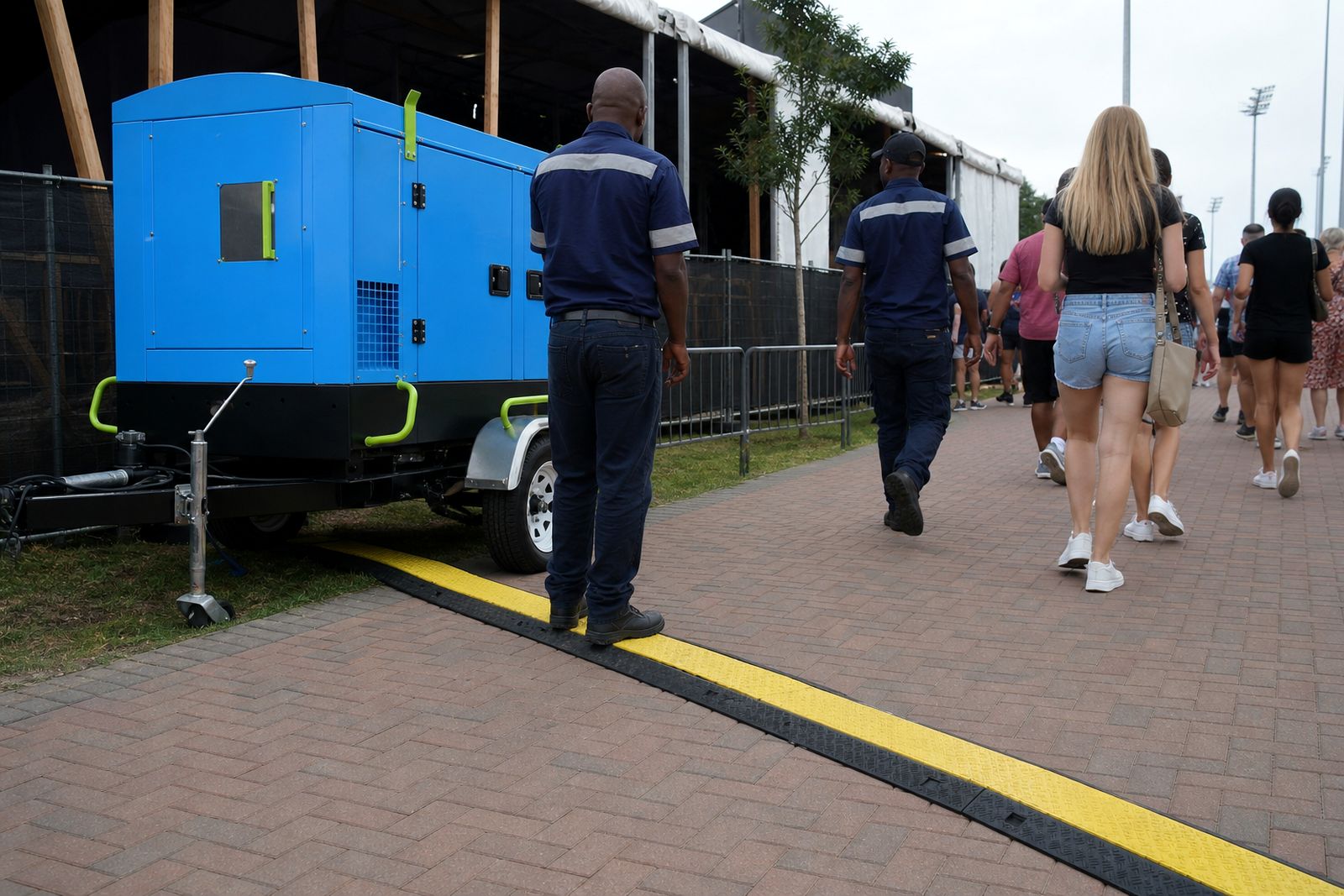
Cable ramps protect temporary cable where people or vehicles need to cross. They are commonly used at venue entrances, service roads, parking areas, pedestrian links between marquees and back-of-house crossings. A ramp is often the simplest way to avoid loose cable becoming a trip hazard or getting damaged by repeated traffic.
Not every route needs a ramp. If cable can be run along an edge, behind barriers or away from access lanes, that is often the cleaner option. But where crossings cannot be avoided, ramps are usually the right call, especially for public events where municipal and venue safety requirements may be stricter.
- Use ramps when: guests cross the cable route, trolleys or vehicles pass over it, or the crossing point cannot be controlled.
- Skip ramps when: cable can be routed fully out of the way, behind structures or along a protected boundary.
- Plan extra ramps when: there are vendor loading periods, refuelling access or wet ground that may shift foot traffic.
After rain, ground conditions can change quickly and people start taking shortcuts, so a route that looked fine in the morning may need extra protection later.
Typical layouts for events and sites
Different jobs call for different distribution layouts. A wedding venue might need one quiet generator feeding a main board, then separate supplies to catering, lighting and entertainment. A festival may need several zones so one issue at a food trader does not affect the stage area. On a film set, distribution often follows unit base, lighting positions and production support areas.
For site and standby hire, practical zoning helps keep essential loads separate from non-essential ones. That makes operation simpler during load-shedding or an outage, and reduces the chance of overloading the temporary supply. We can also include lighting towers and refuelling support where the job runs into the evening or over multiple shifts.
Because each venue is different, we look at distance, ground access, nearby buildings, cable crossings and refuelling access before finalising the equipment list.
What to have ready before you enquire
The quickest way to size distribution properly is to start with a basic load list and a simple site sketch. It does not need to be formal. Even a hand-marked venue plan helps us understand where the supply starts and where each power user will be placed.
- A list of what needs power, such as sound, lighting, catering, refrigeration, traders, site cabins or pumps.
- Approximate positions in metres between generator, boards and end users.
- Whether the event is public facing, private, indoor, outdoor or on a mixed site.
- Any vehicle crossings, pedestrian routes or venue rules that affect cable placement.
- Operating times, including early set-up, late finishes or overnight standby.
Send your details through the enquiry form on our contact page and we will help work out a sensible temporary distribution setup. If you also need generator supply, trailer units or standby backup, we can include that in the same hire plan.
What our Generator Hire customers say
Verified Google reviews
Questions we get asked
Can I hire power distribution without hiring a generator?
Yes, in some cases. If you already have a suitable temporary power source on site, we can discuss boards, cable and ramps as part of the hire, provided the setup is appropriate for the job.
How do I know how much cable is needed?
We normally work from your site plan, distances and equipment positions. If exact measurements are not available, estimated metres between generator, boards and key load points are a good starting point.
Do you set up and collect the equipment?
Yes. Our crew handles delivery, placement, set-up and collection as part of the temporary hire service, with refuelling support available where generator supply is included.
Tell us about the job
Send sizes, materials and where you are through our contact form, and we will come back with the practical options.
Open the contact form