Generator hire guides
This guide section covers the main points that affect temporary power hire, from working out load to choosing cable and distribution. Use it to ask better questions, avoid undersized equipment and plan a safer event or site setup.
What this guide section covers
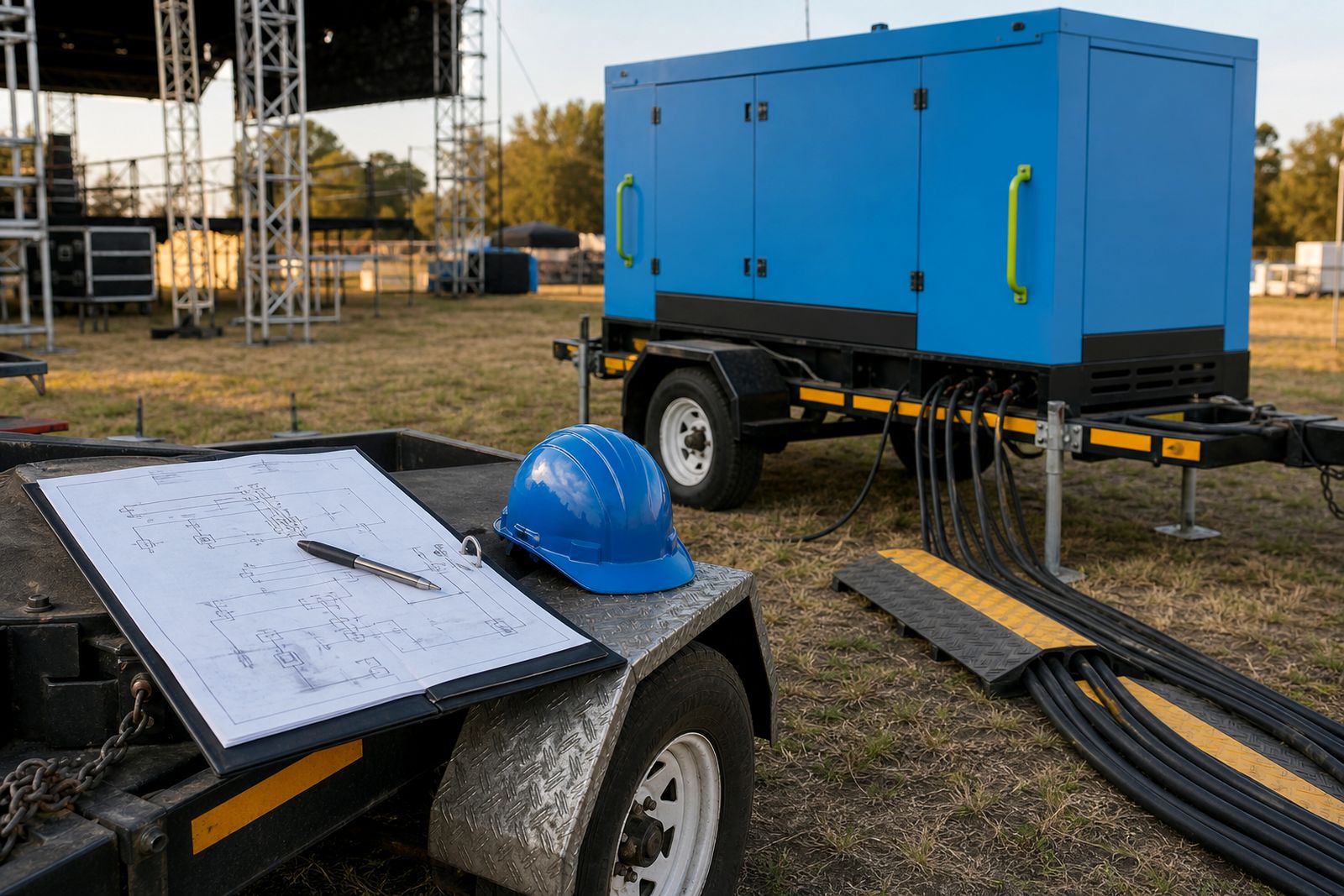
Hiring temporary power is usually easier when the load, layout and running hours are clear from the start. In this section we explain the basics of generator sizing, power distribution, cable runs, fuel planning and general event safety so you can match the hire package to the job.
These guides are useful for outdoor festivals, weddings, corporate functions, filming, building sites and standby during load-shedding or planned outages. The aim is not to turn you into an electrician, but to help you gather the right information before sending an enquiry through our contact page.
- How to list your equipment and estimate total load
- When to choose a smaller portable unit or a silent trailer generator
- Why distribution boards and cable runs matter as much as the generator itself
- How refuelling, access and operating hours affect the hire plan
Start with the load, not the generator size
The most common mistake is choosing a generator first and only then trying to fit the event onto it. A better approach is to list every item that will draw power, note its wattage or amperage, and group it by area. Catering, bar fridges, PA, lighting, AV, chargers, hair and make-up stations, production trailers and site tools all add up quickly.
It also helps to separate continuous loads from equipment that starts and stops. Motors, pumps and some cooling equipment can pull more current on start-up than while running normally. If your event has several peak moments at once, that should be allowed for when sizing. A rough list done early can prevent expensive changes later and avoids long cable runs being added as an afterthought.
- Count actual appliances, not just zones like “kitchen” or “stage”
- Check labels for watts, amps and voltage where possible
- Allow spare capacity for start-up current and late additions
- Note what must stay on if there is a changeover or outage
Choosing between portable and silent trailer generators
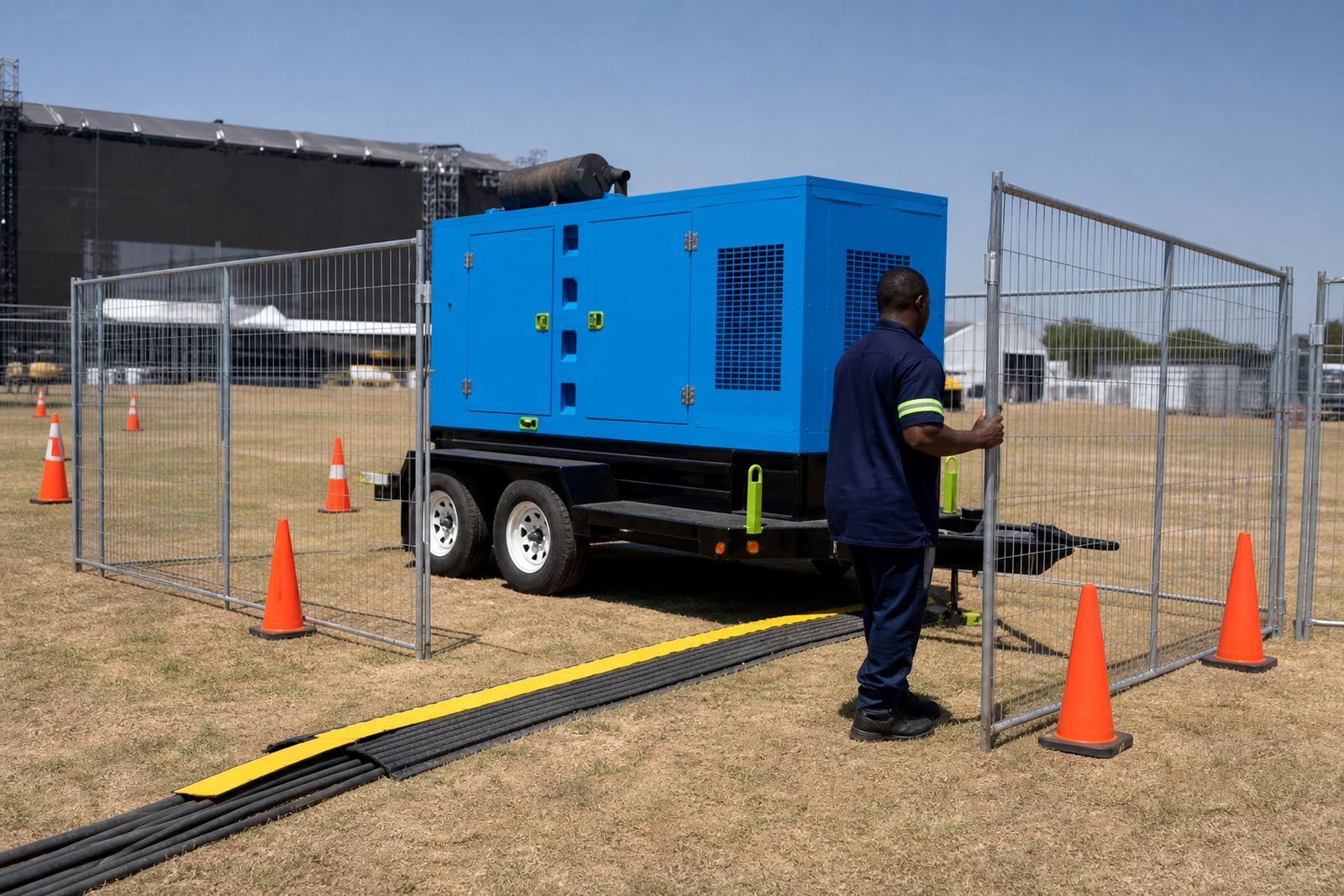
Not every job needs the same type of unit. Small portable generators suit lighter temporary loads and short runs where access is tight. Silent trailer generators are normally the better choice for larger event loads, longer operating hours and venues where noise must be kept down for guests, filming or nearby neighbours.
Distance, terrain and access matter as much as output. A unit that can physically reach the laydown area and sit on firm level ground often saves time on set-up day. In Kempton Park and across Gauteng, venue rules can also affect where a generator may stand, especially near public walkways and parking areas.
- Portable and small generators: useful for lighter loads, compact areas and simple backup needs
- Silent trailer generators: better for events, multiple circuits, longer hours and reduced noise
- If unsure: send a load list, site plan and operating times rather than guessing from size alone
Distribution, cable and ramps are part of the power plan
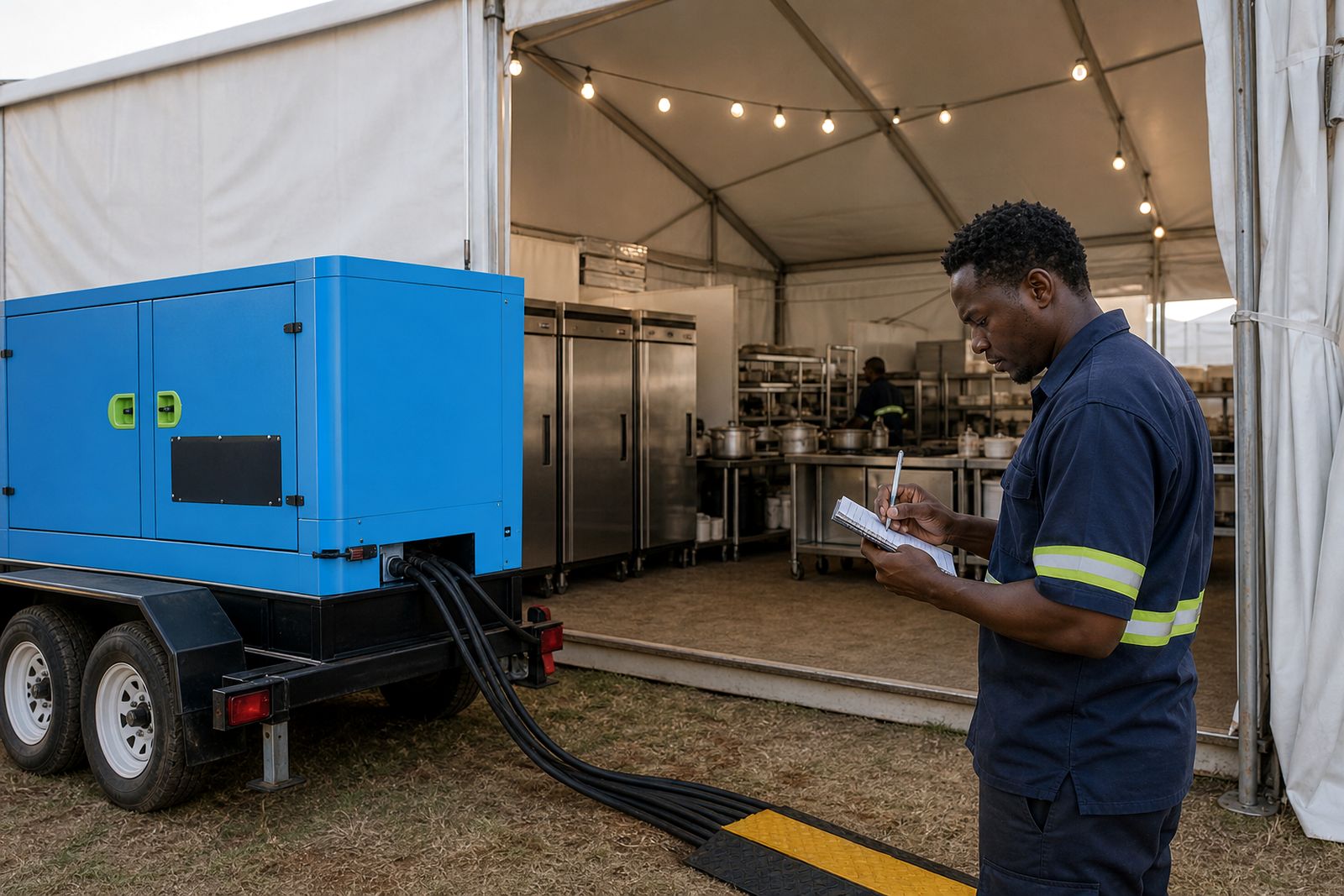
A generator only gets power to site. Distribution boards, extension cable, connectors and cable protection are what make that power usable where people actually need it. For events with several tents, food stalls, bars, backstage areas or technical zones, a proper temporary distribution layout keeps runs organised and helps prevent overloading one point while another sits unused.
Cable ramps are often needed anywhere the public, vehicles or trolleys cross a cable route. This is especially important on school fields, sports grounds, municipal parks and access roads. On wet grass or coastal venues, cable routing should be planned carefully to keep connections protected and tidy.
- Use distribution boards when power must be split safely across different areas
- Plan cable lengths in metres, with spare for routing around structures
- Protect crossings with cable ramps where foot or vehicle traffic is expected
- Keep generator position and end-user position linked on the site plan
Fuel, running hours and access on the day
Fuel planning is often left too late. A unit running a light overnight load will not use fuel in the same way as one carrying catering, sound and lighting through a full programme. Running hours, weather, load swings and refuelling access all affect the support plan.
For longer events, it helps to confirm who controls site access, when gates open, and whether refuelling can happen during the event or only before guests arrive. If a venue has narrow service roads, basement limits or strict quiet times, mention that early. This sounds obvious but it gets missed often.
- Total expected running hours, including testing and changeover time
- Access for delivery vehicles and trailer manoeuvring
- Whether refuelling must happen during live trading or performance hours
- Any venue restrictions on noise, parking or plant movement
General safety points before you enquire
Temporary event power should be planned with clear separation between equipment, crew routes and the public. Generators need ventilation and stable ground, and cable routes should avoid trip hazards, pinch points and standing water. Public events may also need extra thought around barriers, fencing or supervised technical areas depending on the venue rules.
When you send an enquiry, the quickest route to a sensible recommendation is to include the event type, site address, operating times and a rough load list. Photos, sketches and marked-up venue plans help a lot, even if they are basic. That gives our crew enough to suggest suitable generator hire and distribution without guesswork.
- Event type and whether guests or the public will be present
- Site address in Kempton Park, Gauteng or further afield
- Running hours, set-up day and collection timing
- Load list, layout sketch and any access restrictions
What our Generator Hire customers say
Verified Google reviews
Questions we get asked
Can you help me work out what size generator to hire?
Yes. If you send a list of the equipment you need to run, plus operating times and a basic site layout, we can help size the temporary power hire more accurately.
Do I need distribution boards and cable as well as the generator?
In many cases, yes. If power must be split across stages, catering, bars, lighting or work areas, distribution boards and the right cable runs are usually needed to get power safely to each point.
Do you sell generators or do permanent electrical installation?
No. We hire out generators and temporary power-distribution equipment, with delivery, set-up, refuelling and collection by our crew.
Tell us about the job
Send sizes, materials and where you are through our contact form, and we will come back with the practical options.
Open the contact form