

Cable and cable ramps
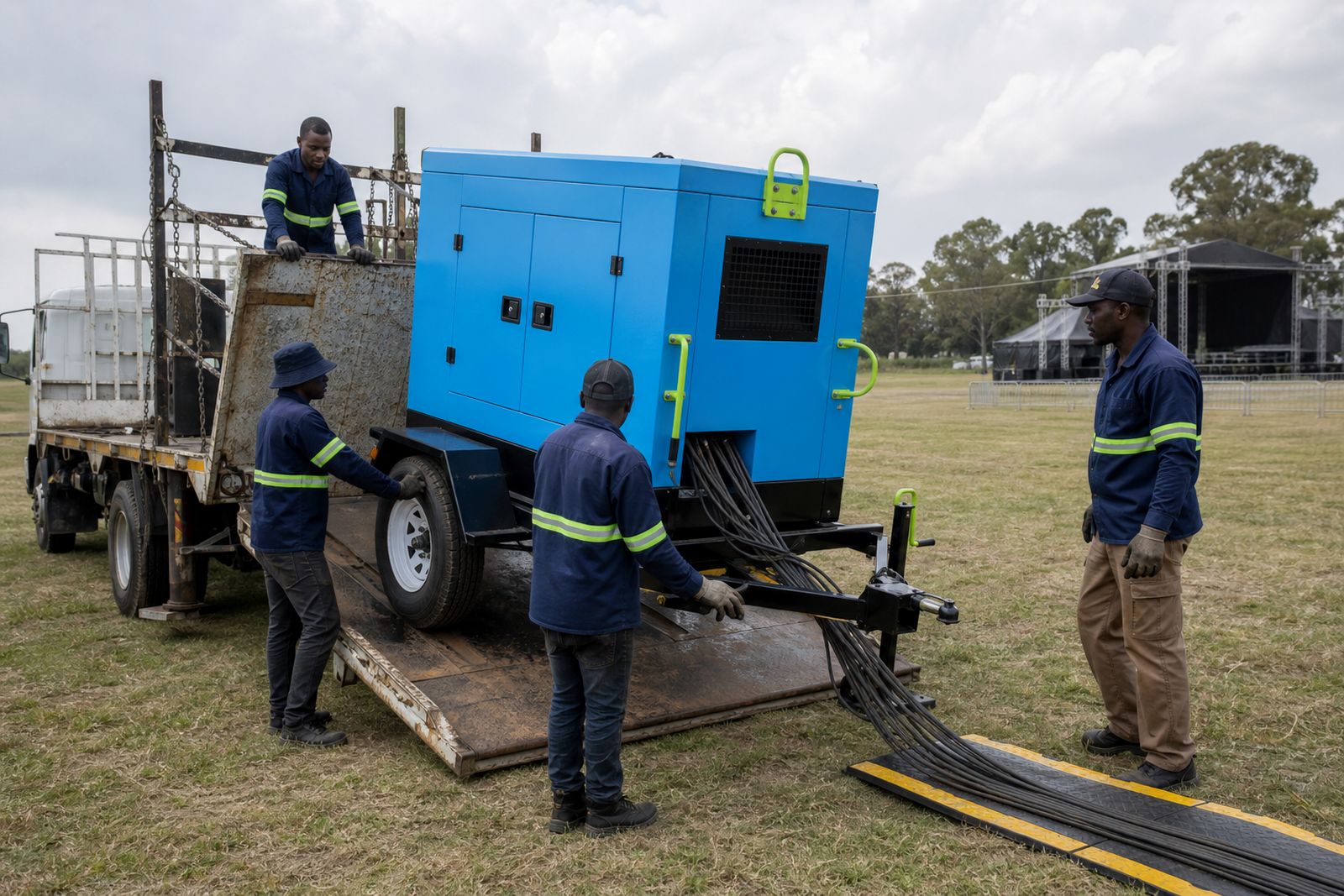
Cable runs need to be safe, visible and easy to manage, especially where guests, crew or vehicles must cross. We hire event cable and cable ramps for tidy temporary power layouts, with our crew delivering, setting out and collecting after the job.
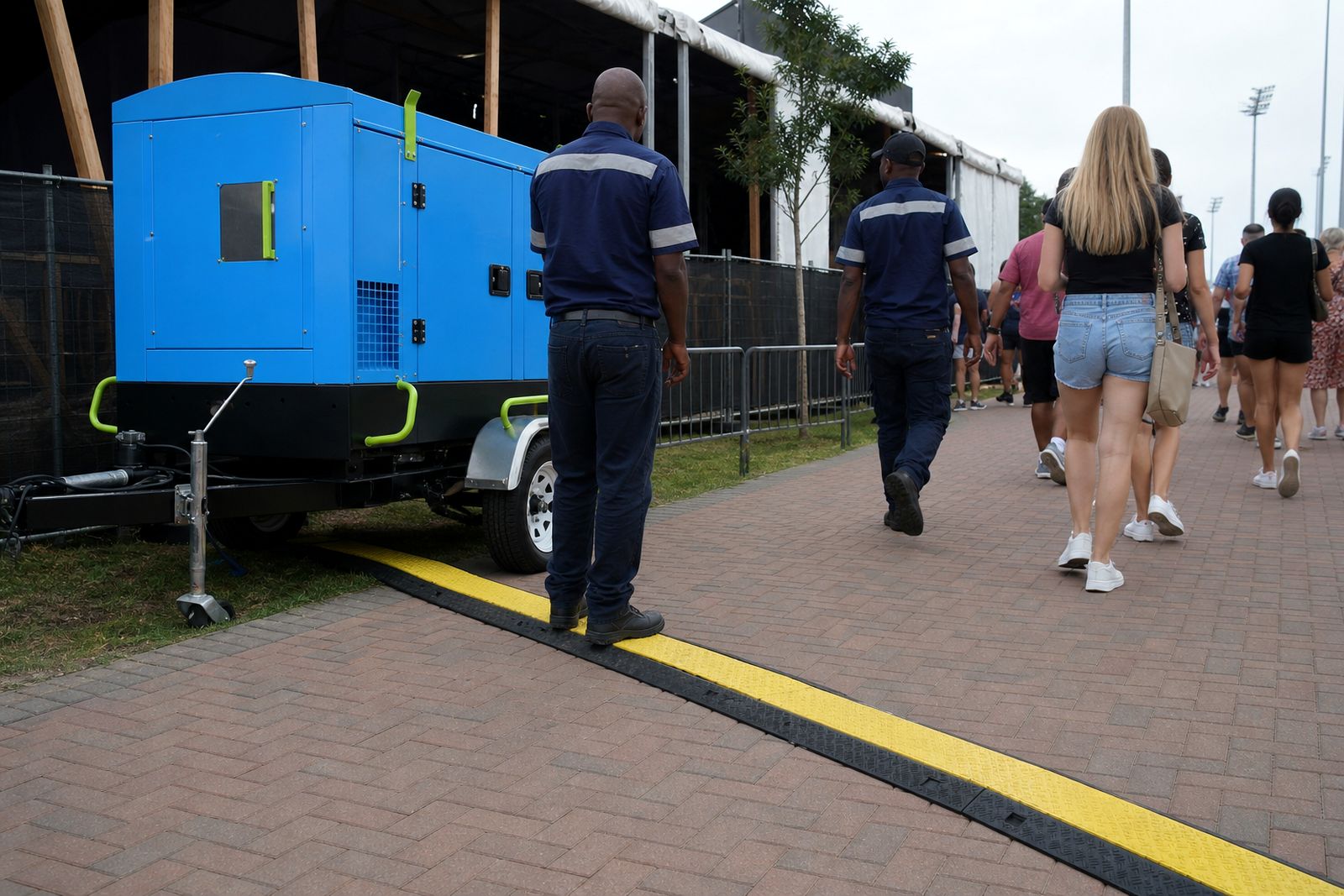
What cable and ramps are used for
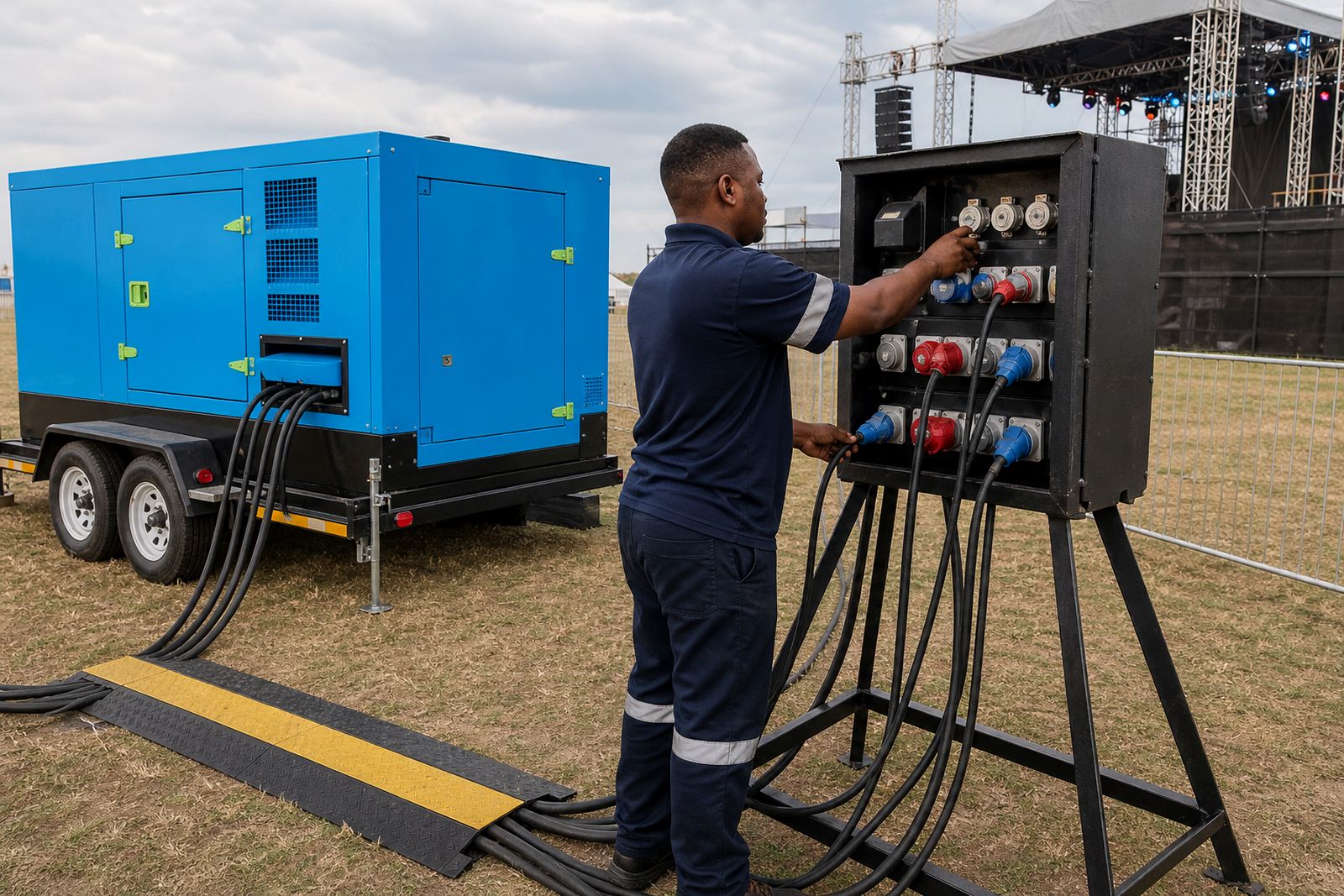
Our cable and cable ramp hire is for temporary power distribution at events, filming locations, building sites and short-term standby set-ups. The aim is simple: get power from the generator or distribution board to where it is needed, while reducing trip hazards and protecting the cable where people or vehicles cross.
At a wedding venue in Muldersdrift, a festival field near Pretoria, or a corporate function in Sandton, loose cable across a walkway can quickly become a problem. Ramps create a defined crossing point and help keep the route neat. They also make striking the site faster at the end because the runs have been planned properly from the start.
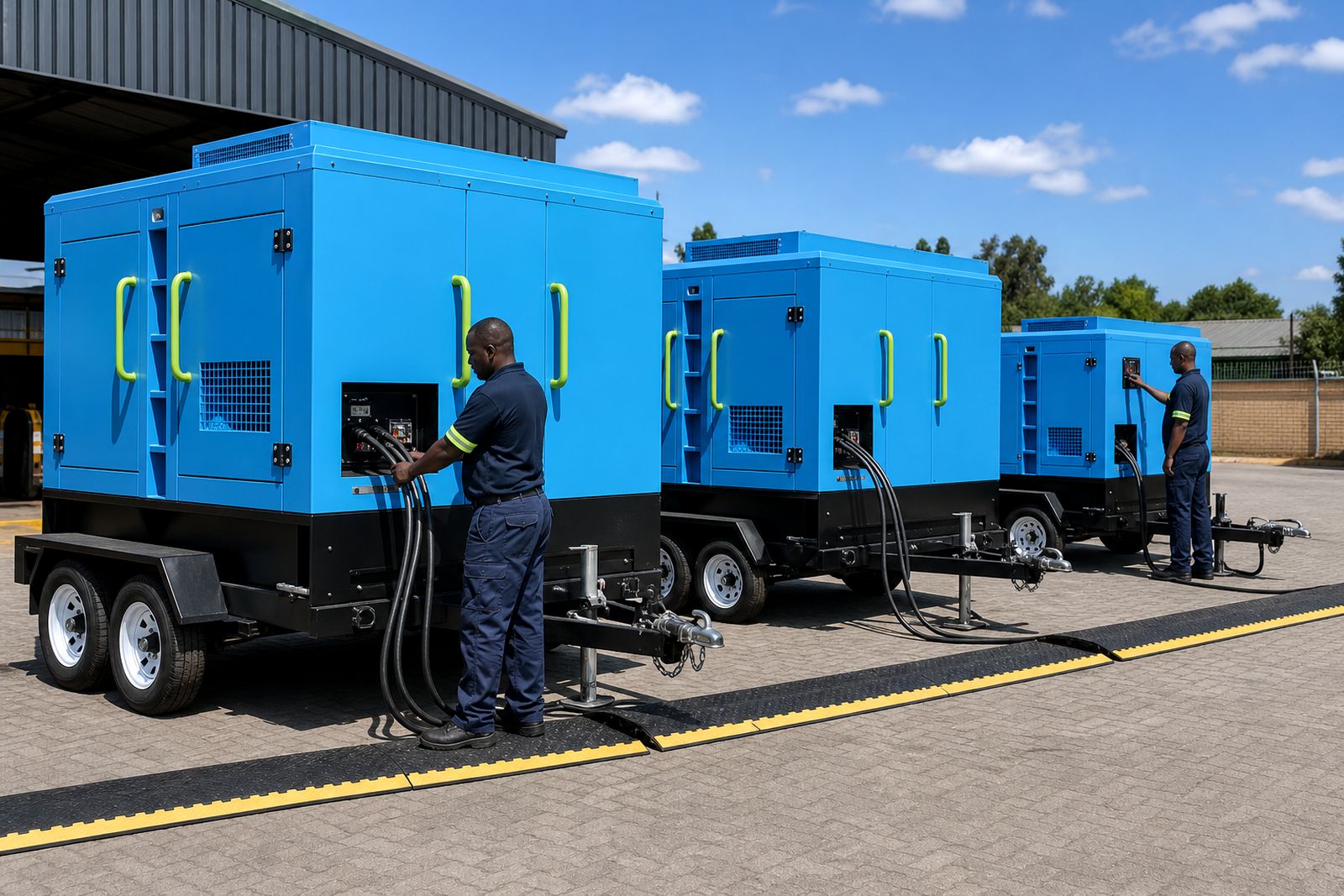
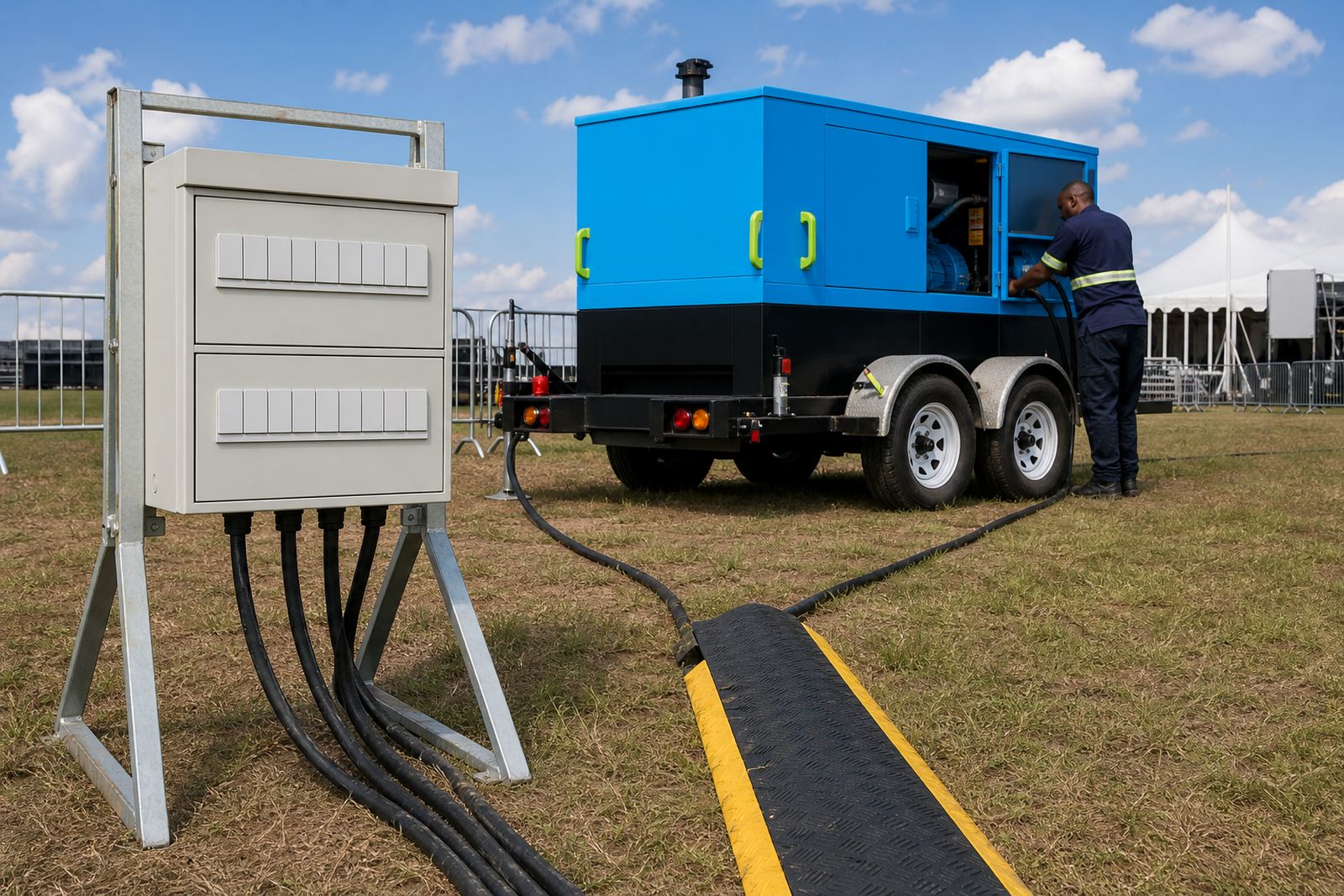
- Temporary power runs between generators, distribution boards and end points
- Pedestrian crossings at entrances, food courts, marquees and production areas
- Vehicle crossings for service lanes, back-of-house routes and site access
- Short-term use at events, shoots, site offices and emergency power positions
Sizes, options and working limits
We match the cable type and the ramp size to the route, load and crossing traffic. Small runs for catering or registration areas need a different layout from a concert FOH line or a site pump feed. Where possible, we route cable around walkways first and only use ramps where a crossing cannot be avoided.
Typical temporary event cable lengths are supplied in manageable sections so that runs can be laid out cleanly and joined where required. Ramp sections are modular and link together to suit the crossing width. For public events we normally favour high-visibility ramp lids and clearly marked edges, especially for evening use or low light conditions.
- Cable lengths commonly arranged in 10 metre, 20 metre and 30 metre sections
- Single-phase and three-phase temporary event supply runs, sized to suit the load
- Pedestrian ramps for foot traffic and light trolley movement
- Heavier duty ramps for service vehicles and controlled access lanes
- Modular sections that can be joined for wider crossings
- Routing accessories for neat turns, edge protection and cleaner set-out
Working limits matter. A pedestrian ramp is not suitable for repeated truck traffic, and a heavy vehicle crossing still needs a sensible approach speed and a reasonably level surface. Very long cable runs can also cause voltage drop if they are not sized correctly, so we check the load, distance and supply arrangement before confirming the set-up.
Where cable ramps suit best, and where they do not
Cable ramps suit temporary crossings on reasonably firm, level ground such as paving, tar, compacted gravel and venue access roads. They are useful at guest walkways, queue lines, backstage routes, market aisles and site entrances where a cable has to pass through an area used by people or vehicles.
They are less suitable where the ground is badly uneven, muddy after heavy rain, or where vehicle traffic is too fast or too heavy for a temporary crossing. In those cases, the route may need to be changed entirely. Coastal humidity is not usually a problem for the ramp itself, but wet conditions can affect the wider power layout, so drainage and placement still need attention.
- Good fit for festivals, weddings, exhibitions, filming and building sites
- Useful where public foot traffic needs a defined and visible crossing
- Works well on flat venue surfaces and managed vehicle routes
- Not ideal on very soft ground or deeply rutted access roads
- Not a substitute for permanent trenching or fixed electrical infrastructure
Site requirements for a proper installation
Before delivery we need to know where the generator will stand, where the distribution boards will sit, and where the final outlets are needed. That lets us map the cable route and reduce unnecessary crossings. A shorter, cleaner route is usually safer and easier to manage during the event.
For set-up on municipal land, pavements or public access areas, the organiser should check venue and local authority rules in advance. Some sites require marked crossings, traffic management, or restrictions on where equipment may stand. Our crew can place the ramps and cables, but the event organiser or site controller must make sure access approvals are in place.
- A clear route plan from source to end point
- Surface type at each crossing, such as tar, paving, gravel or grass
- Whether the crossing is for pedestrians only or includes vehicles
- Expected vehicle type, such as golf carts, bakkies or service trucks
- Times for delivery, set-up, refuelling access and collection
Where load-shedding contingency is part of the event plan, it helps to identify priority circuits early. That way the cable runs can be kept practical and the standby layout wont interfere with guest areas or emergency routes.
Care during the hire period
Temporary cable and ramps do not need much day-to-day attention, but they do need supervision. The main point is to keep the route as it was set out. If a ramp is moved to let a vehicle through, or a cable is pulled sideways to make room for a stall, the crossing may no longer sit flat or protect the cable properly.
We recommend that the site manager, production manager or duty electrician checks the crossings during the event, especially after rain, deliveries or overnight reset work. If a route needs changing, rather call us so it can be done neatly and safely.
- Do not drag equipment across exposed cable outside the ramped crossing
- Keep crossings free of pallets, bins, sandbags and loose signage
- Report any ramp lid that does not close fully or sit flat
- Avoid standing water around joins and connectors where possible
- Do not allow unauthorised changes to the cable route
What to tell us when you enquire
To quote the right cable and ramp arrangement, tell us what the power source is, what needs to be fed, and roughly how far the run is from source to use point. A simple marked-up venue plan or site sketch helps a lot. If you are not sure about the load, we can help you work it out from the main equipment list.
Please also tell us whether the crossing is indoors or outdoors, whether guests or vehicles will cross it, and if there are any fixed obstacles such as stairs, kerbs, fencing or garden beds. If the event is in Johannesburg, Pretoria, Midrand, the East Rand or further afield, include access times and any venue restrictions so the crew can plan properly, it saves time on site.
- Venue or site location
- Event type or site use
- Estimated cable distances in metres
- Single-phase or three-phase supply if known
- Pedestrian only, light vehicles or service trucks at crossings
- Ground surface and any access limitations
What our Generator Hire customers say
Verified Google reviews
Questions we get asked
Can I hire cable ramps without a generator?
Yes. We can supply cable, ramps and related distribution equipment for temporary power layouts where the source is already on site, provided the set-up is suitable for a hire installation.
Are cable ramps safe for guests in formal event areas?
They are commonly used for guest areas when the route is planned properly, the correct ramp type is used and the crossing is kept flat, visible and free of clutter.
How do I know what cable length I need?
Send us the site location, a rough layout and the position of the generator, boards and end points. We can help estimate the route in metres and suggest a practical arrangement.
Also worth a look
Tell us about the job
Send sizes, materials and where you are through our contact form, and we will come back with the practical options.
Open the contact form