Mobile distribution boards
Mobile distribution boards let one generator or incoming supply feed several areas in a controlled way. We hire boards for stages, food stalls, bars, filming, weddings and temporary site power, with cabling and set-up by our crew.
What a mobile distribution board does
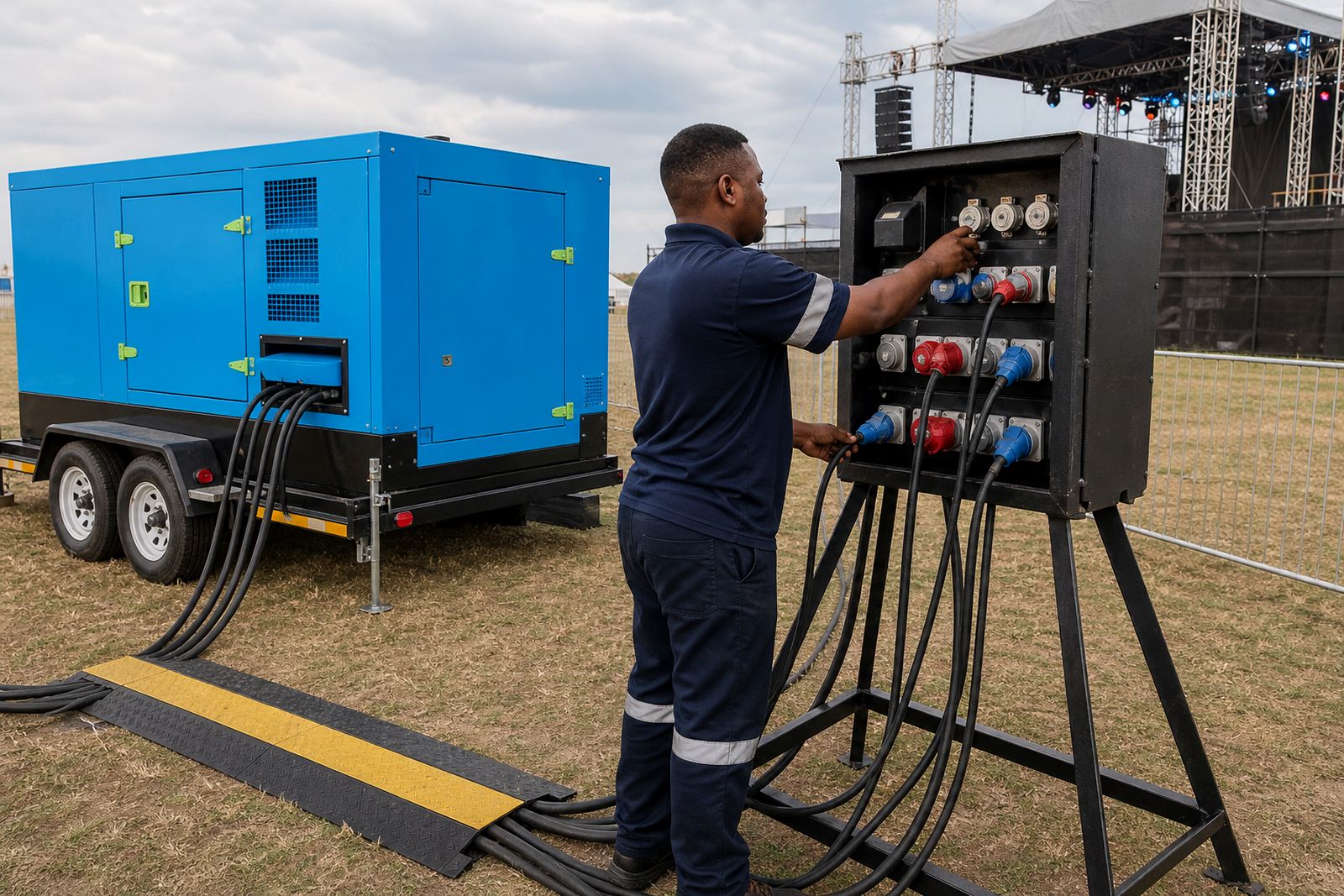
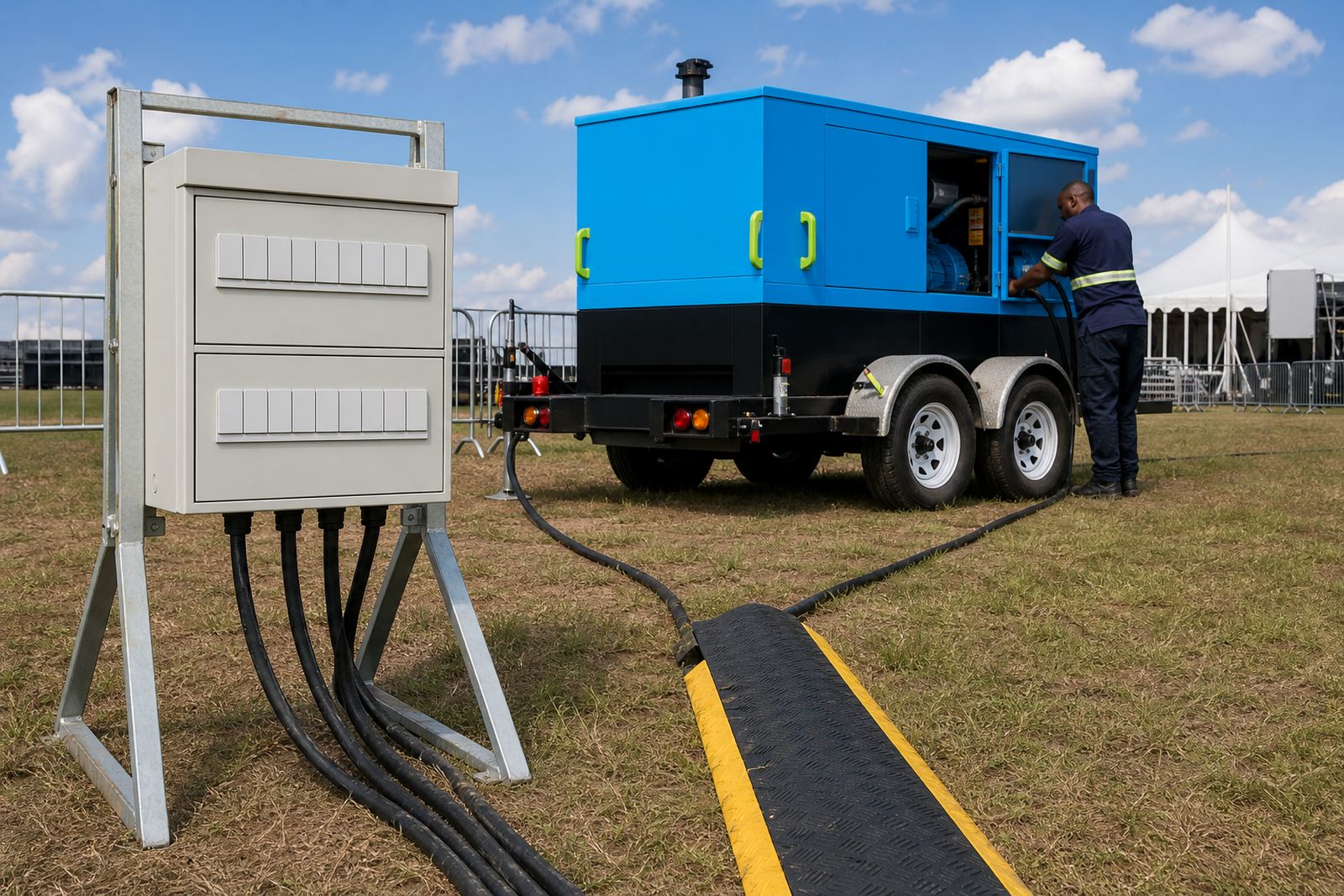
A mobile distribution board takes power from a generator or other temporary source and splits it into smaller, usable circuits. Instead of running everything from one outlet, the board gives you separate feeds for different loads such as catering, sound, lighting, bar equipment, admin areas and vendor stalls.
For events this matters because each area can be planned properly, protected properly and isolated if needed. A stage feed should not be mixed loosely with urns, fridges and market stall kettles. On a film set or building site the same principle applies. Better separation means tidier cable runs, simpler fault finding and less chance of one problem affecting the whole setup.
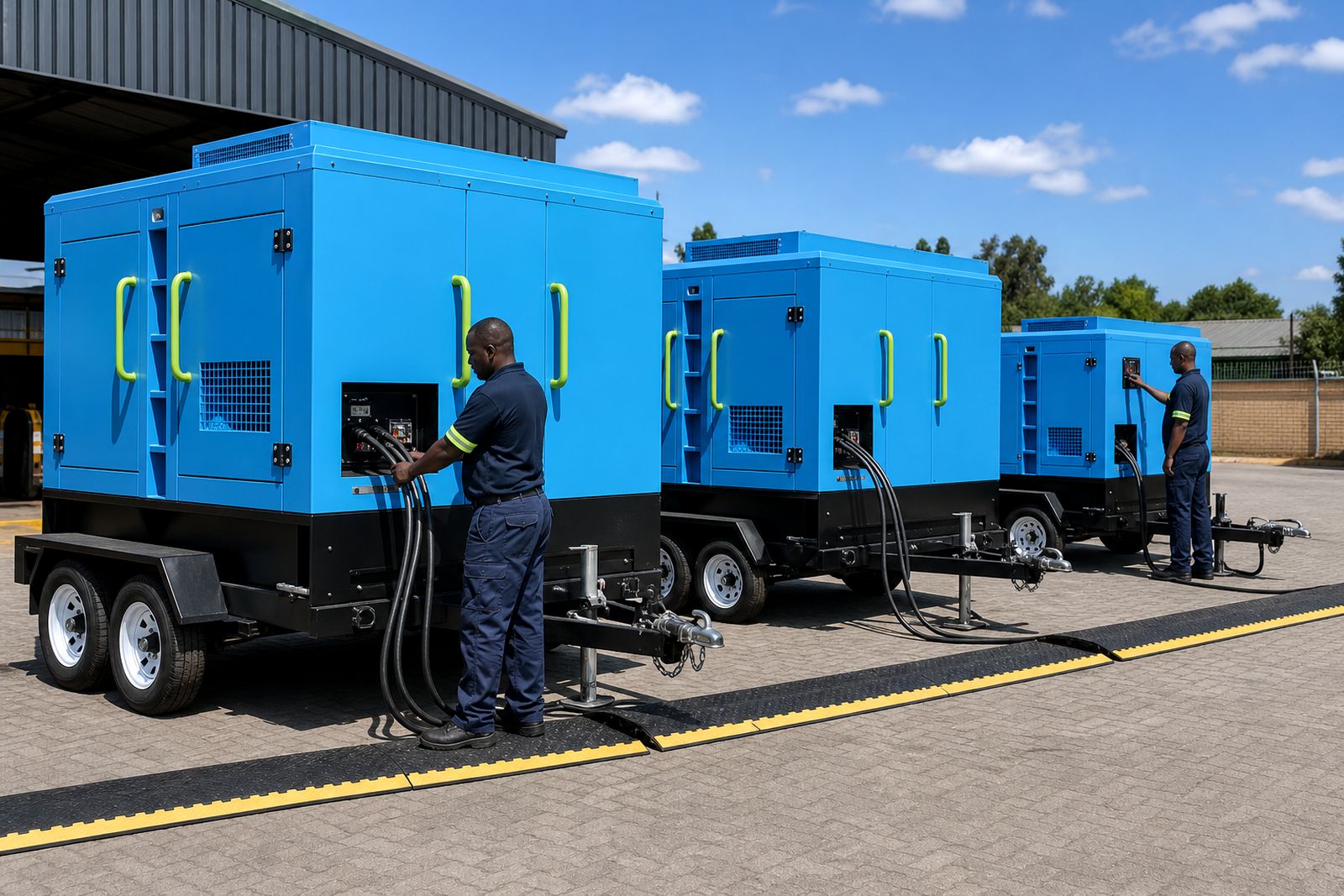
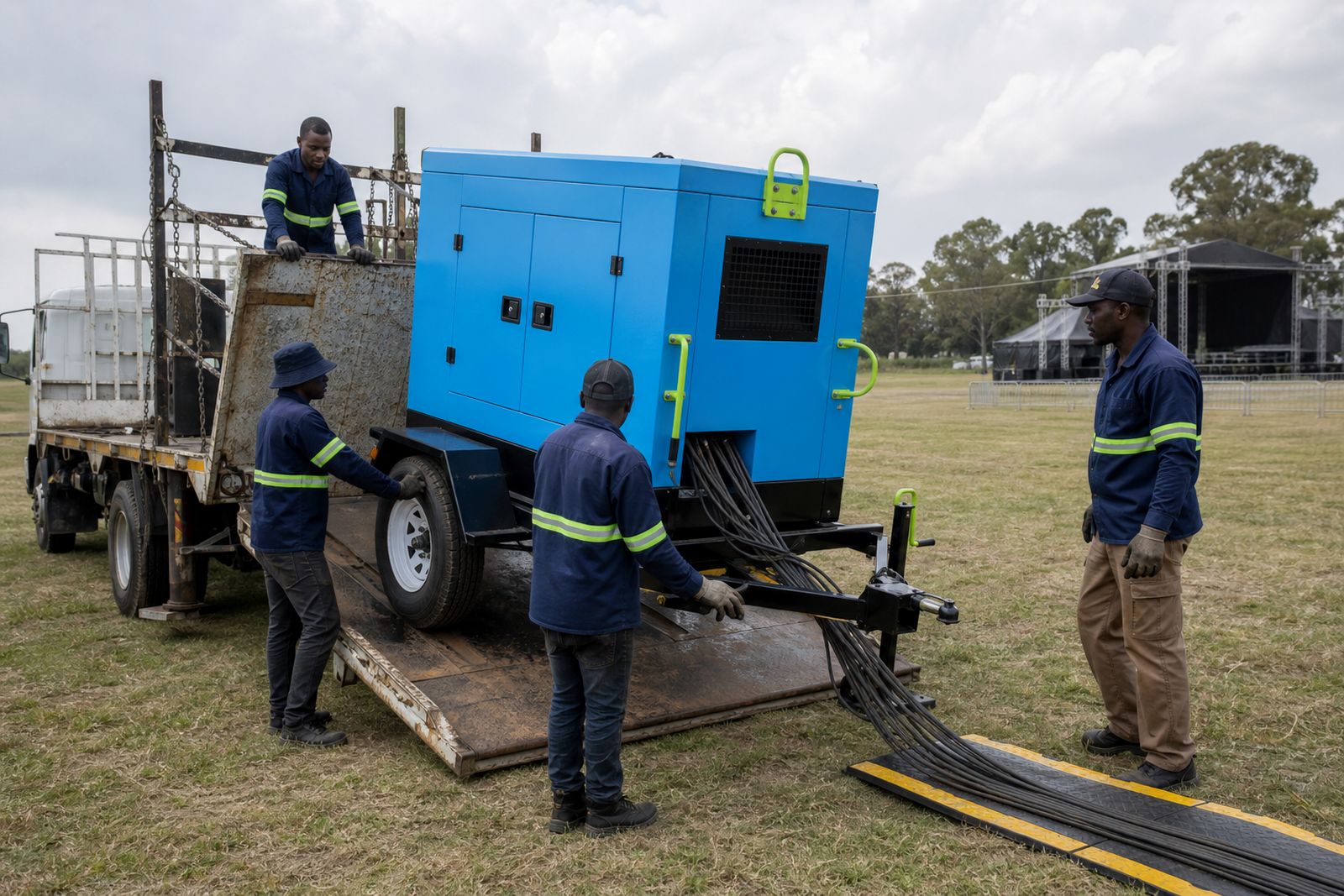
Our boards are hired as part of a temporary power setup. We do not sell boards, and we do not do permanent electrical installation. Where needed, we supply the board together with a generator, feeder cable, extension leads, cable ramps, lighting towers and fuel support.
Board sizes, outlets and working limits
We match the board to the source supply and the type of loads on site. Smaller functions may only need a compact board with several 16A single-phase outlets. A larger event may need a heavier board fed from a 63A or 125A connection, with mixed single-phase and three-phase outlets for technical crew, back-of-house and traders.
The working limit is set by the incoming supply, the protection devices on the board, and the cable size. A board can only distribute what the source can actually provide. If your generator can deliver 40 kVA, the board must be planned within that limit and within the current rating of each outgoing circuit. Thats why we ask about actual equipment, not just guest numbers.
- Small boards for low-demand service areas, kiosks and single work zones.
- Medium boards for weddings, corporate events, food courts and mixed stall layouts.
- Larger boards for stage power, production compounds and multi-zone festival distribution.
- Single-phase and three-phase outlet combinations depending on the application.
- Protection by breakers and earth leakage where suitable for the circuit type.
Some equipment with high start-up current, such as refrigeration, pumps or certain lighting gear, needs extra allowance. Long cable runs also affect performance, especially on bigger outdoor sites.
Where mobile boards work well, and where they do not
Mobile distribution boards suit temporary setups where power must be shared over more than one area. They are common at outdoor festivals in Gauteng, wedding venues, conference lawns, school functions, sports days, roadshows, church gatherings, filming locations and short-term site camps. They also help on standby jobs where one generator has to support selected circuits during load-shedding or a municipal outage.
They are not the right answer for every job. If you need a permanent change to a building supply, that must be handled separately under the correct electrical process. If your venue already has enough correctly placed outlets with suitable capacity, a hired board may not be necessary. Very small domestic backup needs can also be better served by a simpler temporary arrangement, depending on the load.
- Good for temporary events with multiple users and changing layouts.
- Good for open grounds where stage, catering and ablutions are spread out.
- Good for sites that need power moved and collected after the job.
- Not for permanent building alterations.
- Not for supplying unknown loads without a proper list of equipment.
Site requirements before we set up
The board must stand on firm, reasonably level ground with enough space around it for safe access. Wet or muddy areas may need repositioning or ground protection, especially in summer storm conditions. At racecourses, farms and coastal venues we also check for dust, salt air and windblown moisture because those conditions can affect connectors and cable routing.
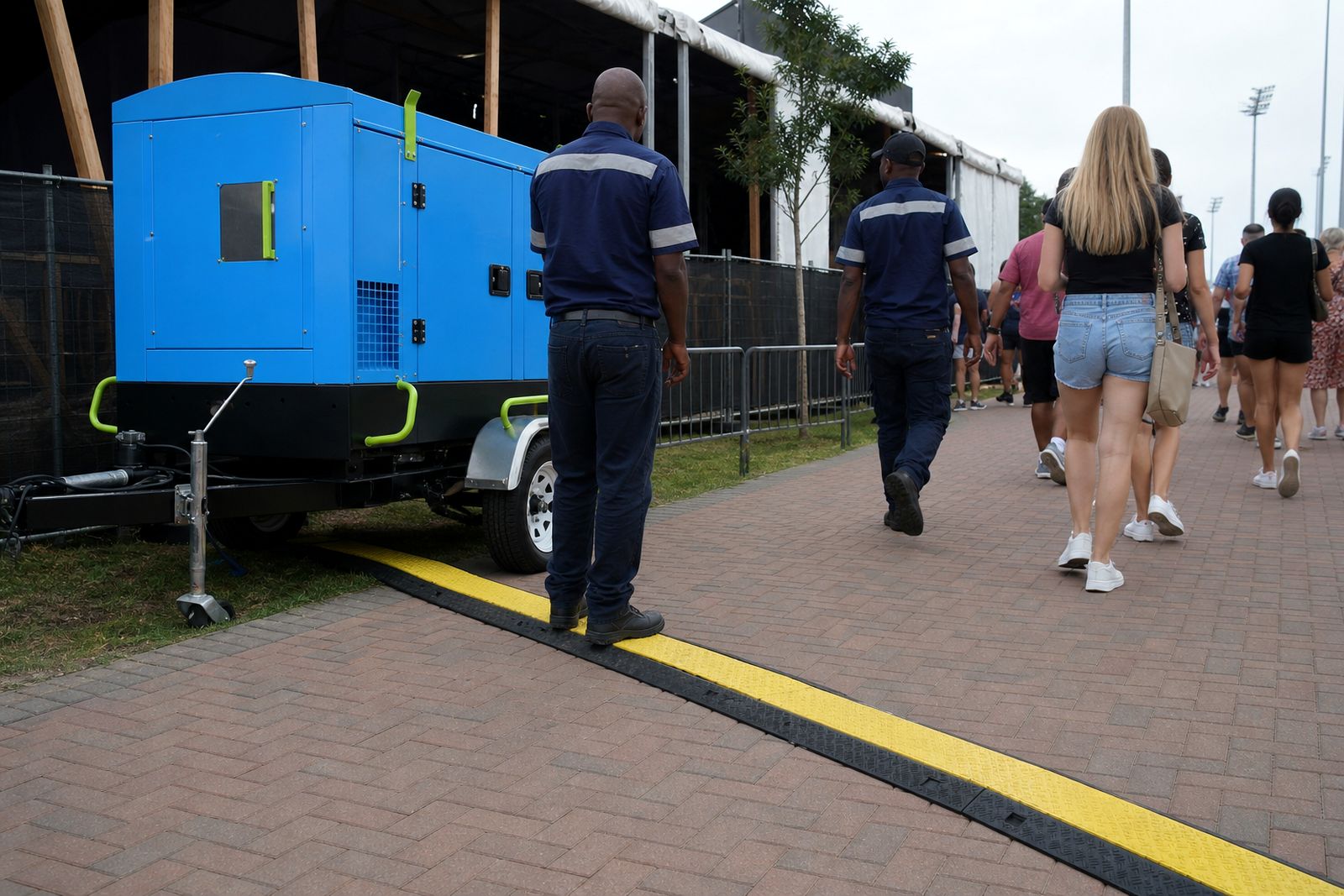
You should tell us where the generator will sit, how far the power must travel and whether the public will cross any cable lines. Public walkways often need cable ramps. Catering tents and bars usually need thoughtful outlet placement so staff do not drag extension leads across serving paths. If the municipality, venue or event organiser has rules on sound, refuelling positions, fencing or fire lanes we need that information upfront.
Access is important too. A trailer generator, board and cable set need a clear route for delivery and collection. If setup is upstairs, behind a stadium tunnel or inside a convention hall with strict loading times, say so when you enquire because it changes the labour and cable planning.
Using the board properly during the event or shift
Once the board is set, it should not be moved, opened or reconfigured by other contractors unless agreed in advance. Temporary power runs best when users stick to the planned outlets and do not add unlisted appliances on the day. A coffee machine added at the last minute, or extra fridges for a cash bar, can push a circuit past its intended duty.
Keep the area around the board clear. Do not stack décor, drape, packaging or gas bottles against it. Protect leads from vehicle traffic, and do not let vehicles park on cable ramps for long periods. If heavy rain is expected, tell the event team early so access routes and connection points can be checked before the weather turns nasty.
- Use only the outlets assigned to your area or contractor.
- Do not daisy-chain random multiplugs into high-load equipment.
- Report trips or damaged plugs straight away.
- Keep food waste, water containers and cleaning hoses away from the board.
- Let us know if operating hours extend beyond the original plan, as fuel and crew timing may need to change.
What to send with your enquiry
The quickest way to get the right board is to send a clear equipment list through the enquiry form on our contact page. Include each item you want powered, where it will stand, and how long it must run. If you have a site map, even a simple sketch helps a lot.
Please include the basics below so we can size the board, cable and generator correctly first time.
- Event or site type, such as wedding, festival, filming or standby.
- Venue location in Kempton Park, Gauteng or further afield.
- Dates, operating hours and setup or strike times.
- Power source required, or whether a generator is already part of the job.
- Load list with wattage, amps or photos of equipment labels.
- Number of stalls, bars, technical areas or work zones.
- Approximate cable distances between source and users.
- Whether the public or vehicles will cross the cable route.
- Any venue rules on noise, access, refuelling or overnight security.
If you are not sure about the load, we can help you work it out from the appliances and production equipment on your list. A bit of planning here saves a lot of trouble on site and keeps the power layout tidy, safe and easier to manage.
What our Generator Hire customers say
Verified Google reviews
Questions we get asked
Can one board run both catering and stage equipment?
Yes, if the incoming supply and circuit layout are sized correctly. We usually separate technical, catering and general service loads so one area does not interfere with another.
Do you hire boards on their own?
In some cases yes, but many jobs also need generator supply, feeder cable and cable protection. We will advise based on the venue, distances and total load.
What if I do not know the amps or kVA I need?
Send us the list of equipment and where it will be used. We can help estimate the load and suggest a suitable board arrangement for the event or site.
Also worth a look
Tell us about the job
Send sizes, materials and where you are through our contact form, and we will come back with the practical options.
Open the contact form