
Generator safety at events
A generator can keep an event running smoothly, but only if it is placed, protected and managed properly. This guide covers the main safety points for events in Gauteng and beyond, from fuel handling to cable routes and guest separation.
Start with the right location
The safest generator is one that is correctly positioned before guests, suppliers and performers arrive. At events, the unit should sit on firm, level ground with enough space around it for ventilation, refuelling and service access. A soft grass verge, muddy sports field or sloped parking area can cause trouble once the trailer settles or if rain comes through later in the day.
Keep the generator out of public walkways and away from entrances, queue lines, food service points and smoking areas. Exhaust direction matters as well. Aim fumes away from tents, marquees, stages, catering prep areas and any enclosed or semi-enclosed space. On winter evenings when air sits low, exhaust can drift more than organisers expect, so a little extra distance helps.
- Use a flat, stable surface that can carry the trailer and fuel weight.
- Leave working space around access panels and the tow hitch.
- Point exhaust away from guests, staff work areas and tent openings.
- Do not place a generator inside a hall, tent, container or basement area.
- Keep clear access for the crew in case the unit needs attention during the event.
Fence it off and control public access
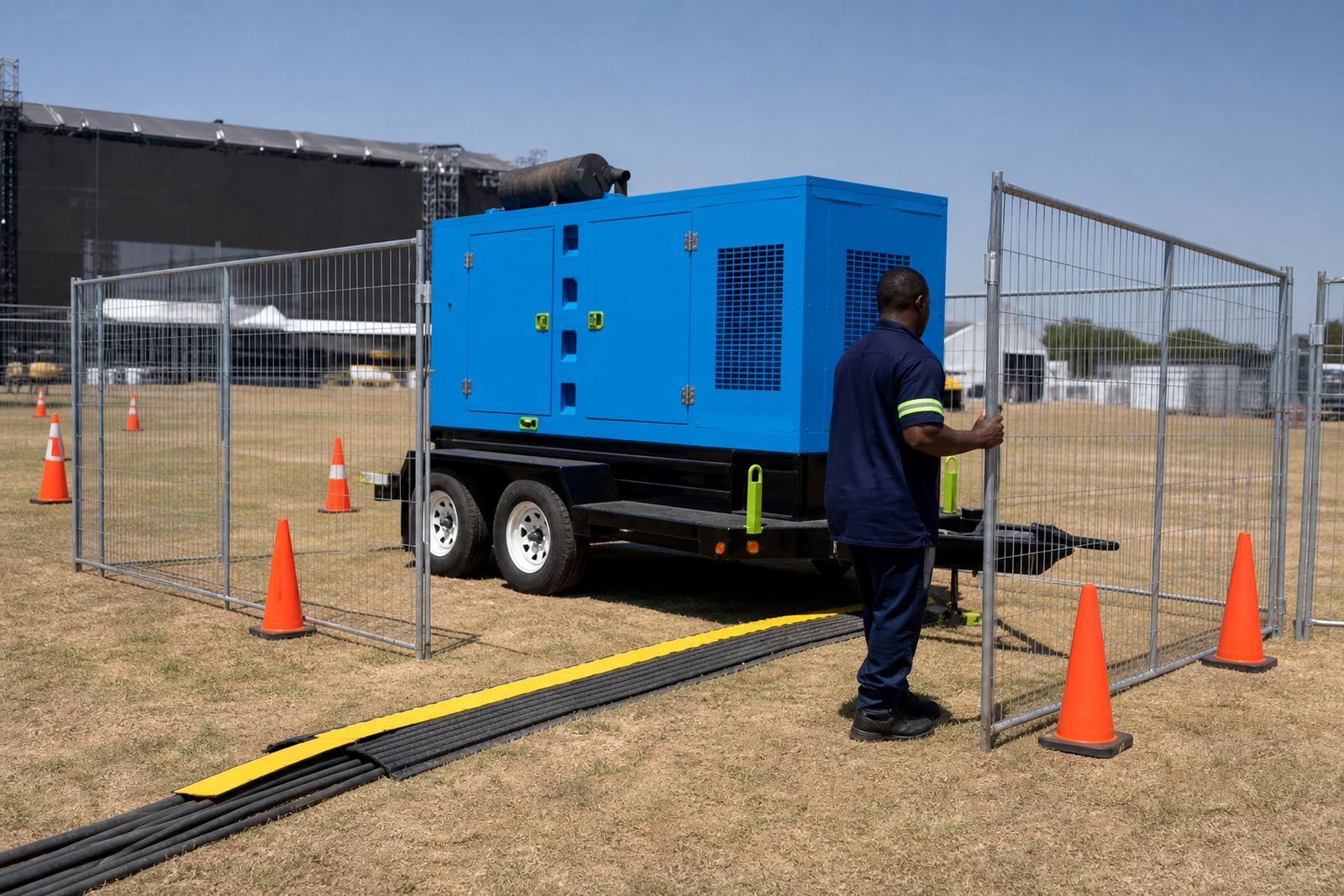
Guests should never be able to touch the generator, distribution equipment or fuel area. Even a quiet unit in a sound-reduced canopy can attract curious children, and at busy events people lean, sit or place drinks on equipment if there is no barrier. A proper fenced-off zone is one of the simplest ways to avoid burns, trips and interference.
Use crowd-control barriers, temporary fencing or a clearly defined restricted area around the generator and boards. The aim is to stop casual access while still allowing the crew to refuel, check levels and reset protection devices if needed. If the event runs into the evening, this area must be lit properly. A dark corner behind a marquee becomes a hazard very quickly.
- Set a barrier line around the generator and main distribution point.
- Allow a gate or opening for authorised crew access only.
- Add warning signage where guests may approach from parking or service roads.
- Light the restricted area after sunset and during load-shedding set-up periods.
- Do not store décor, stock, gas bottles or rubbish inside the fenced area.
Manage fuel carefully during the event
Fuel is often the point where a well-run event slips up. Refuelling should be planned around load, running hours and site access rather than left until the tank is nearly empty. A generator feeding sound, lighting, fridges or tills should not be allowed to run low during a peak period. It is better to schedule checks and top-ups with enough time in hand.
Only the crew should handle refuelling. The area should stay clear of guests and open flames, and the generator should be managed in line with the site conditions and the equipment in use. Spills must be dealt with straight away. On dusty building sites and festival grounds, diesel on the ground can turn into a slip hazard within minutes, and on paving it travels further than people think.
If the venue has municipal rules for vehicle movement, noise hours or service access, make sure the refuelling plan fits those restrictions. Some estates and sports grounds also limit where support vehicles may stop, so this should be agreed before event day.
Earthing and distribution must match the set-up
Temporary power is not just about the generator itself. The distribution layout, cable lengths, earth arrangement and protective devices all need to suit the event load and the venue conditions. Wet grass, irrigation overspray, coastal humidity and early morning dew can all change the risk level compared with a dry indoor set-up.
Earthing should be considered as part of the full temporary power plan, not as an afterthought. The crew should know what is feeding which area, where the boards are placed and how circuits are separated for sound, lighting, catering and back-of-house. This helps prevent overloads and makes fault finding much quicker if a trip occurs.
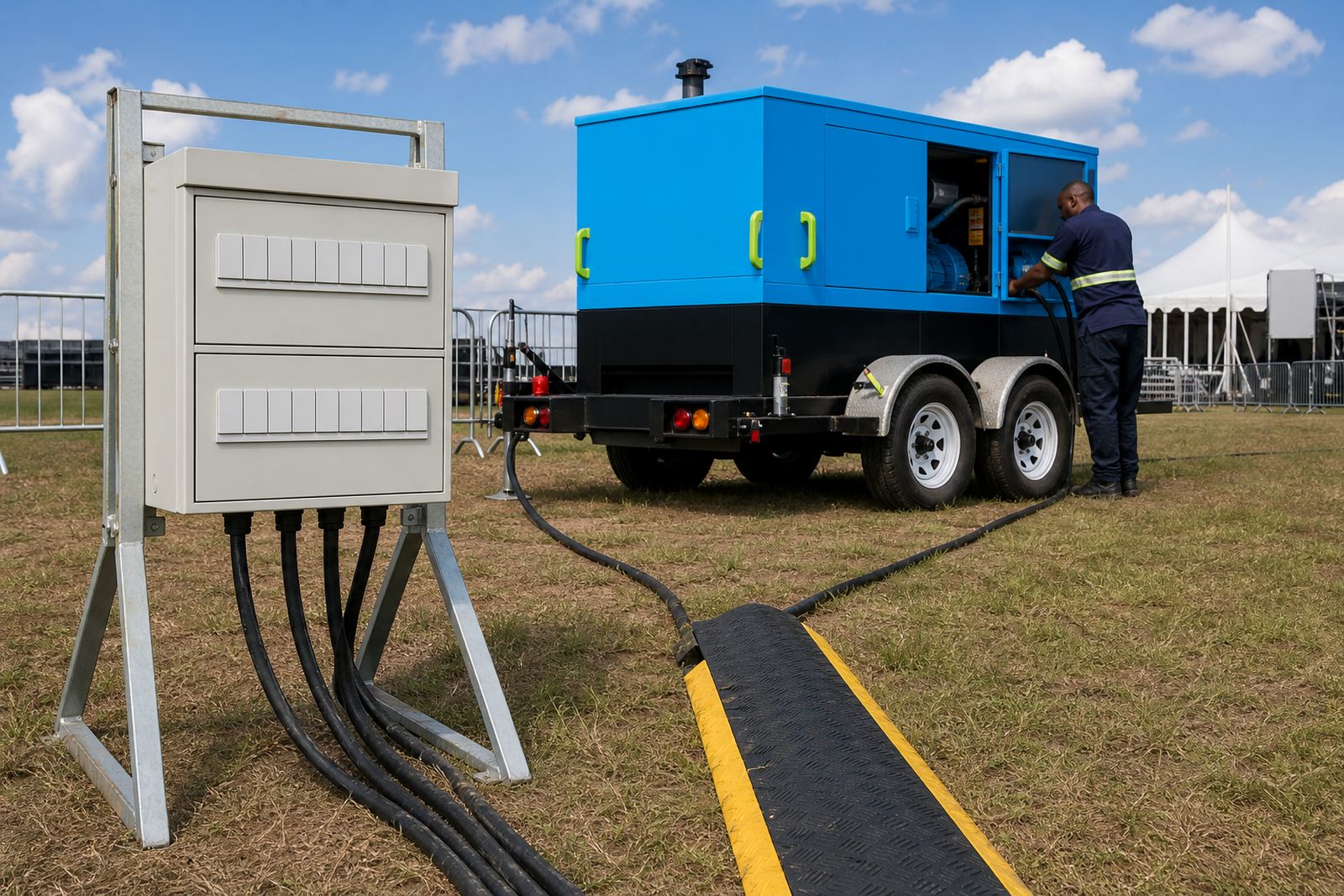
- Place distribution boards where they are accessible to crew but away from guest traffic.
- Keep boards off standing water and out of direct irrigation spray.
- Label outgoing circuits clearly for faster checks during the event.
- Avoid ad hoc plug sharing that changes the planned load balance.
- Review any late additions such as coffee machines, heaters or extra lighting before connecting them.
Protect cable routes and keep walkways clear
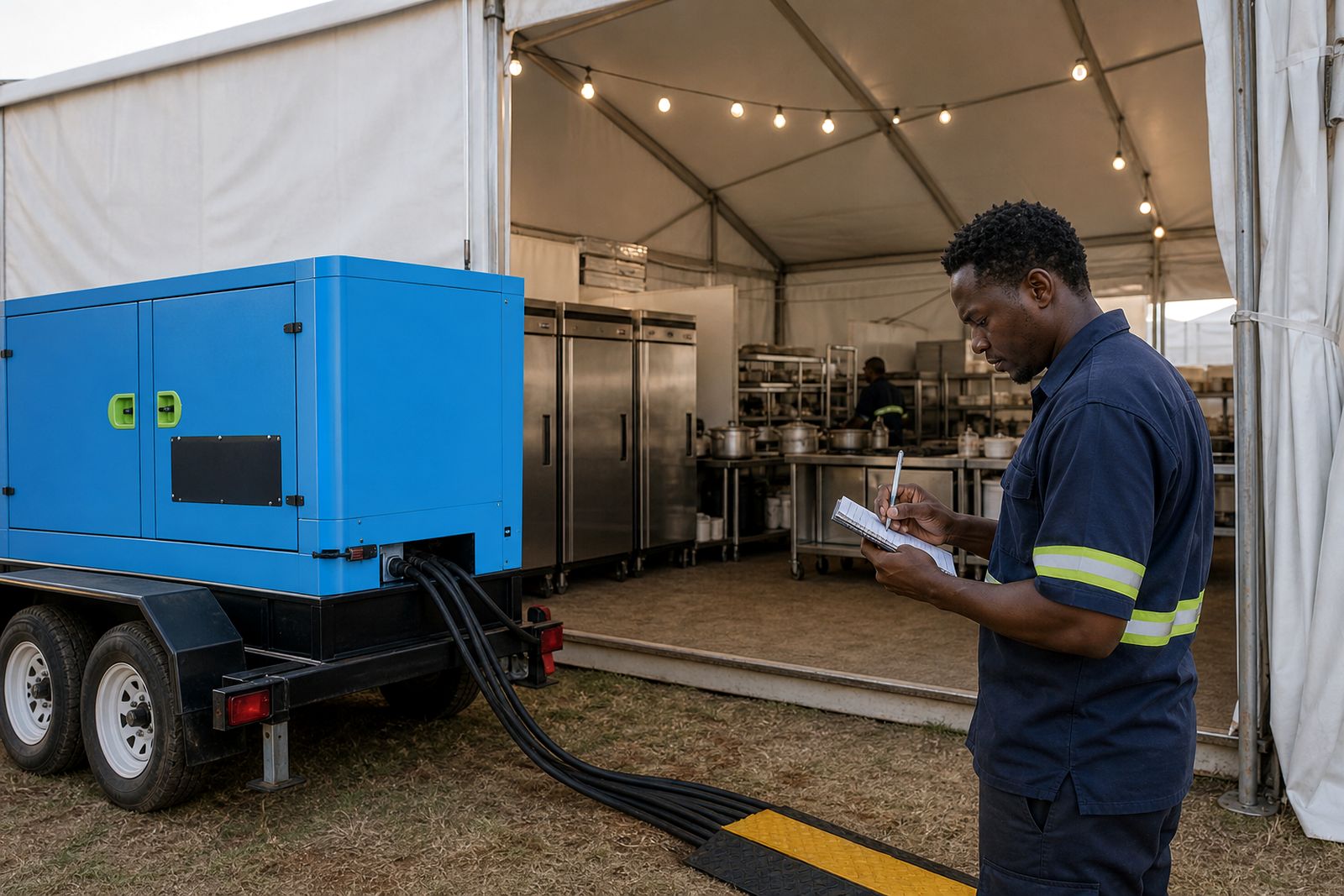
Most event power problems are found in the cable route rather than at the generator. Cables laid across pedestrian areas, delivery paths and emergency exits need proper protection and clear planning. If a route crosses a public area, use cable ramps suited to the traffic. A taped-down lead across grass is not enough for guests, service trolleys or wheel traffic.
Try to route cables along fence lines, behind vendor stalls, under stage edges or through back-of-house passages where foot traffic is lower. Keep them out of puddles where possible and avoid sharp edges on trailer decks, steel stair units and temporary flooring. At wedding venues and corporate functions, neat routing also helps prevent venue staff from moving cables to tidy up, which can create strain or disconnections.
Check the route again once décor, seating and vendor stands are in place. A safe cable run at 08:00 can become a blocked or pinched route by late afternoon.
Use a simple event-day safety checklist
A short checklist keeps everyone focused on the basics. It also helps when several suppliers are working at once and the power crew needs quick confirmation that the generator area is still safe. For larger festivals, filming days and multi-zone events, repeat these checks during the day rather than only at start-up.
- Generator parked level and stable.
- Barrier or fence in place around generator and main boards.
- Exhaust facing away from people and enclosed areas.
- Cables routed safely, with ramps at crossings.
- Distribution boards dry, accessible and clearly allocated.
- Fuel plan confirmed, with safe crew access for refuelling.
- No unauthorised equipment added to the load.
- Restricted area lit after dark.
- Emergency access kept open for service vehicles and venue teams.
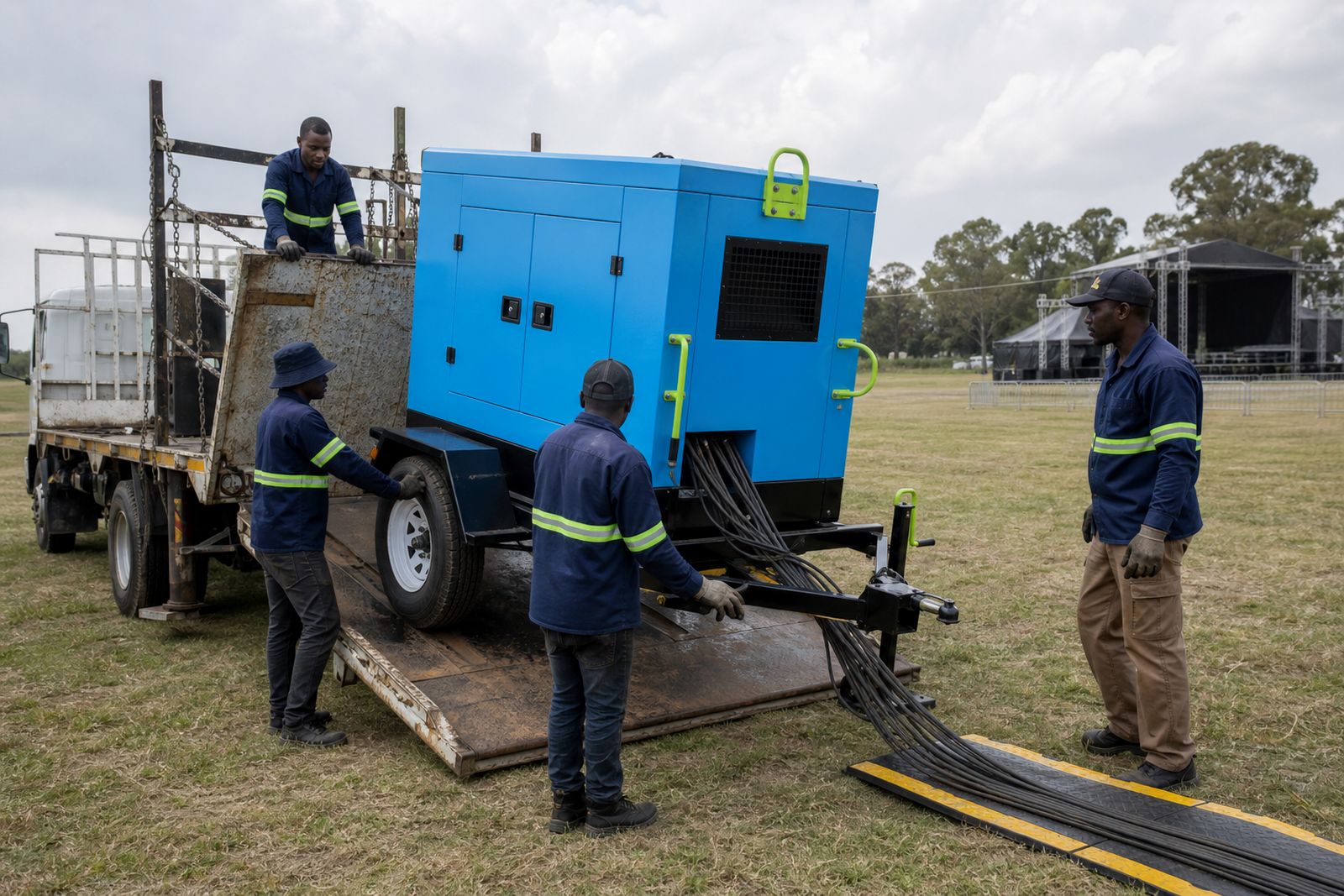
If you are unsure about sizing, placement or the best layout for a venue, it helps to work it out before the event day. We assist with generator and power-distribution hire for events, sites and standby use, including delivery, set-up, refuelling and collection by our crew. Enquiries can be sent through the contact page form.
What our Generator Hire customers say
Verified Google reviews
Questions we get asked
How far should a generator be from guests?
There is no single distance that suits every event, because layout, wind, noise limits and the size of the unit all matter. The key point is that guests should be kept outside a fenced or controlled area, with exhaust directed away from public spaces and tent openings.
Can a generator stand inside a marquee or hall if it is raining?
No. A generator should not be run inside enclosed or semi-enclosed spaces. Rain protection needs to be handled by suitable equipment placement and cable planning, not by moving the generator into an area where fumes and heat can build up.
Do cable ramps really matter for small events?
Yes. Even at a smaller wedding, market or corporate function, cables crossing walkways can become a trip hazard or get damaged by trolleys and light vehicles. Proper ramps and careful routing are part of a safe temporary power set-up.
Also worth a look
Tell us about the job
Send sizes, materials and where you are through our contact form, and we will come back with the practical options.
Open the contact form