Working out your event load
The quickest way to avoid power trouble at an event is to list every item that needs electricity and total the load properly. This guide shows you a simple way to do that before you book generator and power-distribution hire.
Start with a full equipment list
Before you think about generator size, write down every item that will draw power on site. Most event load problems happen because one or two items were missed, not because the generator itself was faulty. Include the obvious items such as sound and lighting, but also the smaller loads that get added late, like phone charging stations, catering fridges, urns, laptops, battery chargers and security lighting.
Split the list by area so it is easier to check. For example, stage, bar, catering tent, registration, VIP area, ablutions, production office and parking. If your event is outdoors, also note cable run distances in metres, because long runs affect where distribution boards should be placed.
- Sound system, amplifiers, mixers and DJ gear
- Stage, festoon, flood and decorative lighting
- LED screens, projectors and AV control
- Catering equipment, urns, coffee machines, fridges and freezers
- Cashless tills, laptops, printers and Wi-Fi equipment
- Toilets, pumps, fans and small tools
- Security, gate control and site office power
- Battery chargers, cell charging points and vendor plugs
If suppliers have given you equipment schedules, use those rather than guessing. One line on a quote that says “full sound” is not enough to size power safely.
Use running load, not only plug size
Once your list is done, add the running wattage or kilowatt rating for each item. You will usually find this on a rating plate, power supply label or spec sheet. Do not assume that a 16A plug means the item always uses the full 16A. The plug tells you the maximum connection size, not the normal draw.
As a rough guide, watts are what most smaller items show, while larger equipment may be listed in kilowatts. Add all the running loads together for each area and then total the site. Keep your units consistent. If some items are in watts and others in kilowatts, convert them before adding. One kilowatt equals 1,000 watts.
For many event loads, especially lighting, AV and catering, it helps to note whether an item runs continuously or only cycles on and off. Fridges, freezers and pumps may not draw full load all the time, but they still need to be counted properly when choosing a generator.
- 1,500W heater = 1.5kW
- 3,000W urn = 3kW
- 800W fridge = 0.8kW
- Two 2kW lights = 4kW total
This sounds basic, but it saves time and money later. A neat load list makes the hire setup much easier to plan.
Allow for start-up surge and tricky loads
Some equipment needs more power when it starts than when it runs. This matters with refrigeration, air-conditioning units, pumps, some compressors and certain discharge lighting. If you only count the running figure, the generator may seem big enough on paper but still trip when gear starts together.
Ask each supplier if their equipment has a start-up surge, inrush current or motor load. If they cannot give exact figures, tell us what the equipment is used for and we can help you allow a sensible margin. This is especially important on film sets, kitchen areas and events using multiple cold rooms or mobile bars.
Also watch for loads with poor power factor, dimmers, older lighting racks and mixed catering equipment on one board. These are common causes of nuisance tripping. Better load balancing and the right distribution layout usually fixes the issue, but it must be planned early.
If load-shedding is part of your backup planning, check what must restart immediately and what can come back in stages. Not every circuit needs to be brought on at once, and staggering larger loads can reduce the generator size needed.
Add a sensible spare margin
After adding the known loads, leave spare capacity for changes on the day. Events nearly always grow a bit. Someone adds a warmer, a charger bank, an extra coffee station or more work lights during setup. If your power plan has no headroom, a small addition can become a big problem.
A practical rule is to avoid planning a generator to run flat out for the whole event. Leaving spare capacity helps with reliability, fuel use and sudden peaks. It also gives room for weather-related changes such as more lighting during a rainy afternoon or extra fans in hot conditions.
- Add margin for late additions from vendors and production
- Allow for startup surges on fridges, pumps and motors
- Keep some spare ways on distribution boards
- Plan extra cable length for field changes and safer routing
- Consider overnight loads if fridges or security lights stay on
For weddings and corporate functions this margin may be modest. For festivals, public events and larger catering setups it is often more important than people expect.
Think in circuits and distribution, not only generator size
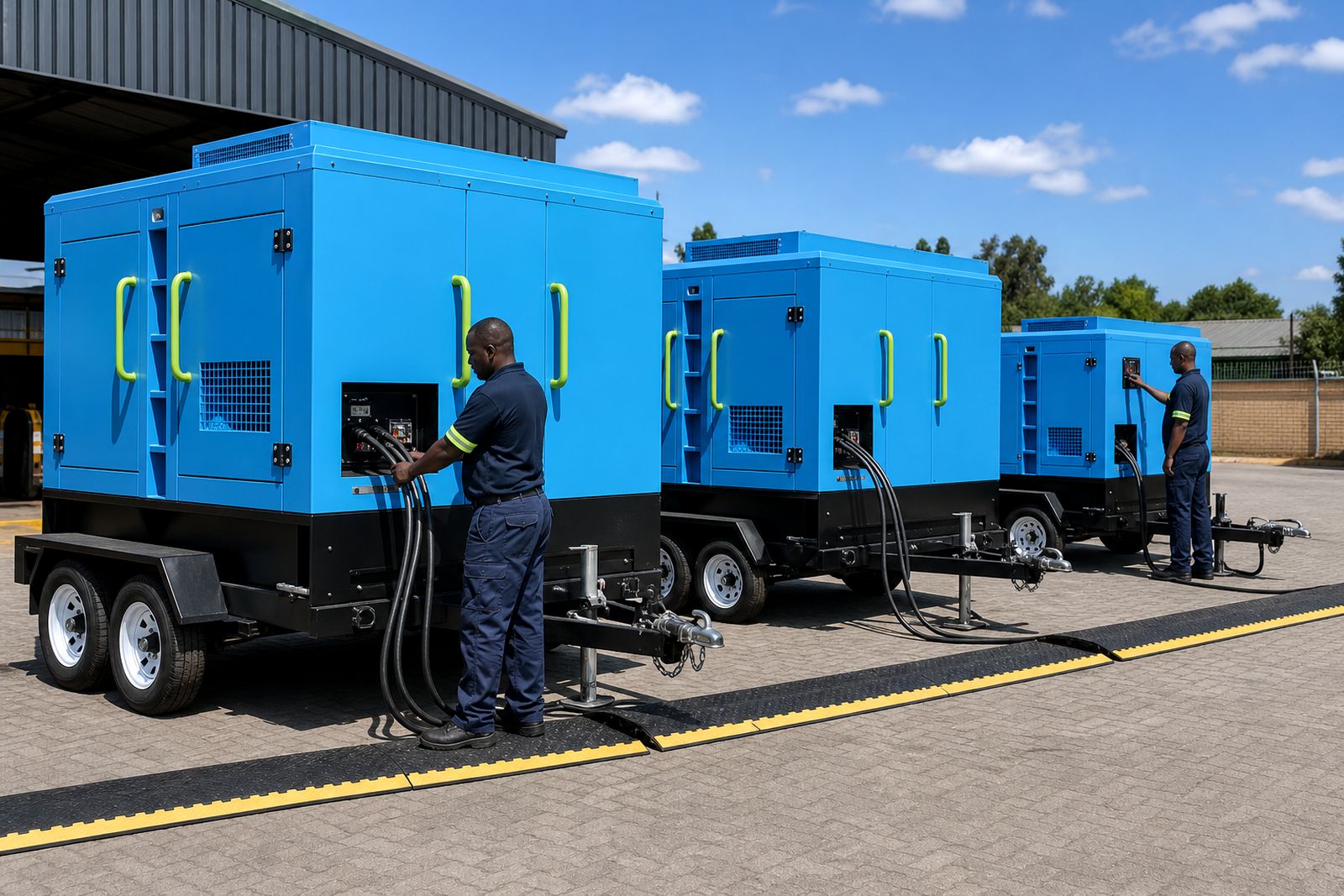
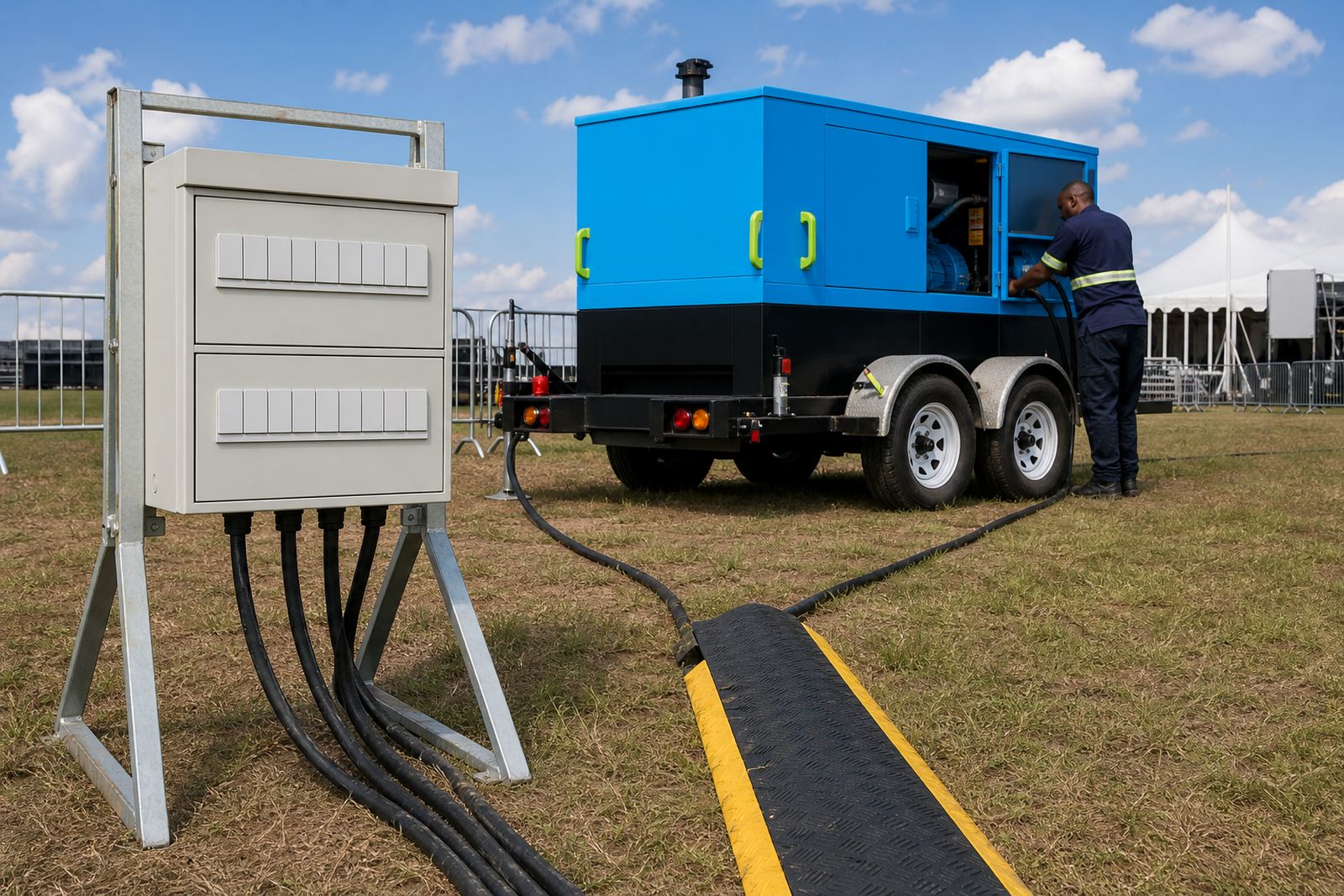
A generator can be large enough overall but the event can still have power problems if the distribution is wrong. You need to know how many separate circuits are required, where boards should sit, and how power will reach each area safely. Long cable runs across entrances, muddy ground or vehicle routes need planning from the start.
Break the event into practical zones. A stage may need one board, catering another, bars another and the production office a separate supply. This makes load balancing easier and keeps faults from affecting the whole site. It also helps with cleaner cable routes and less clutter in guest areas.
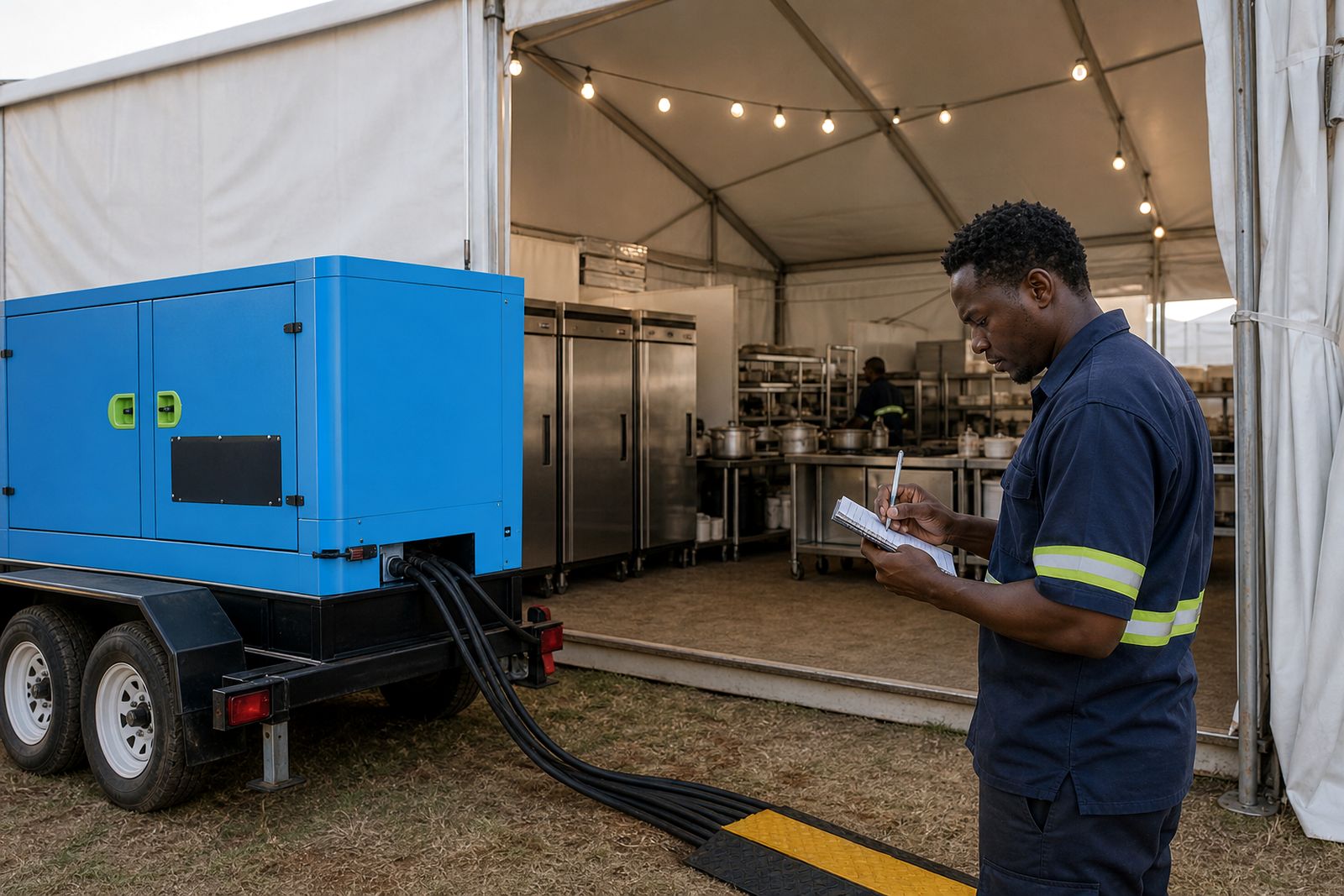
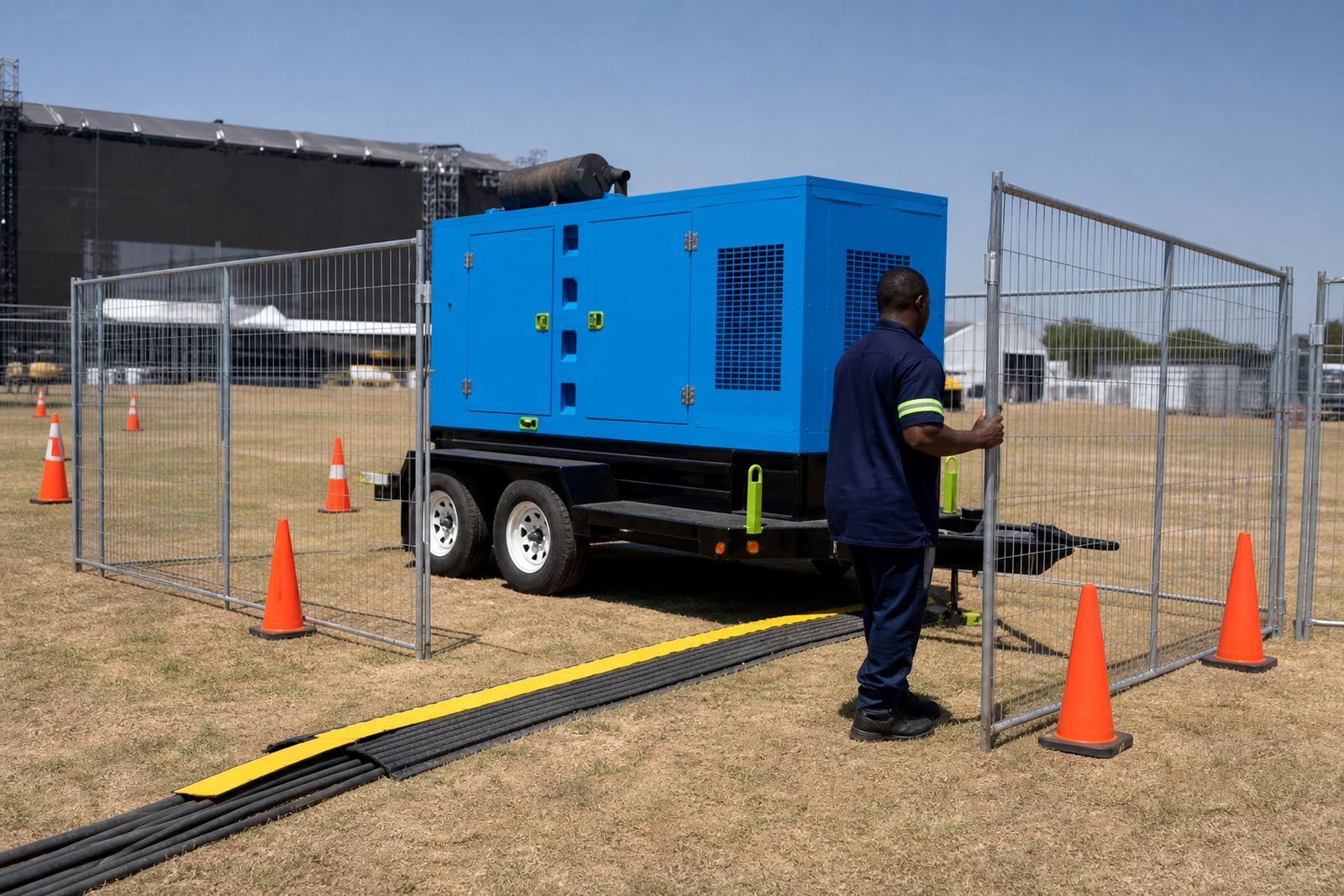
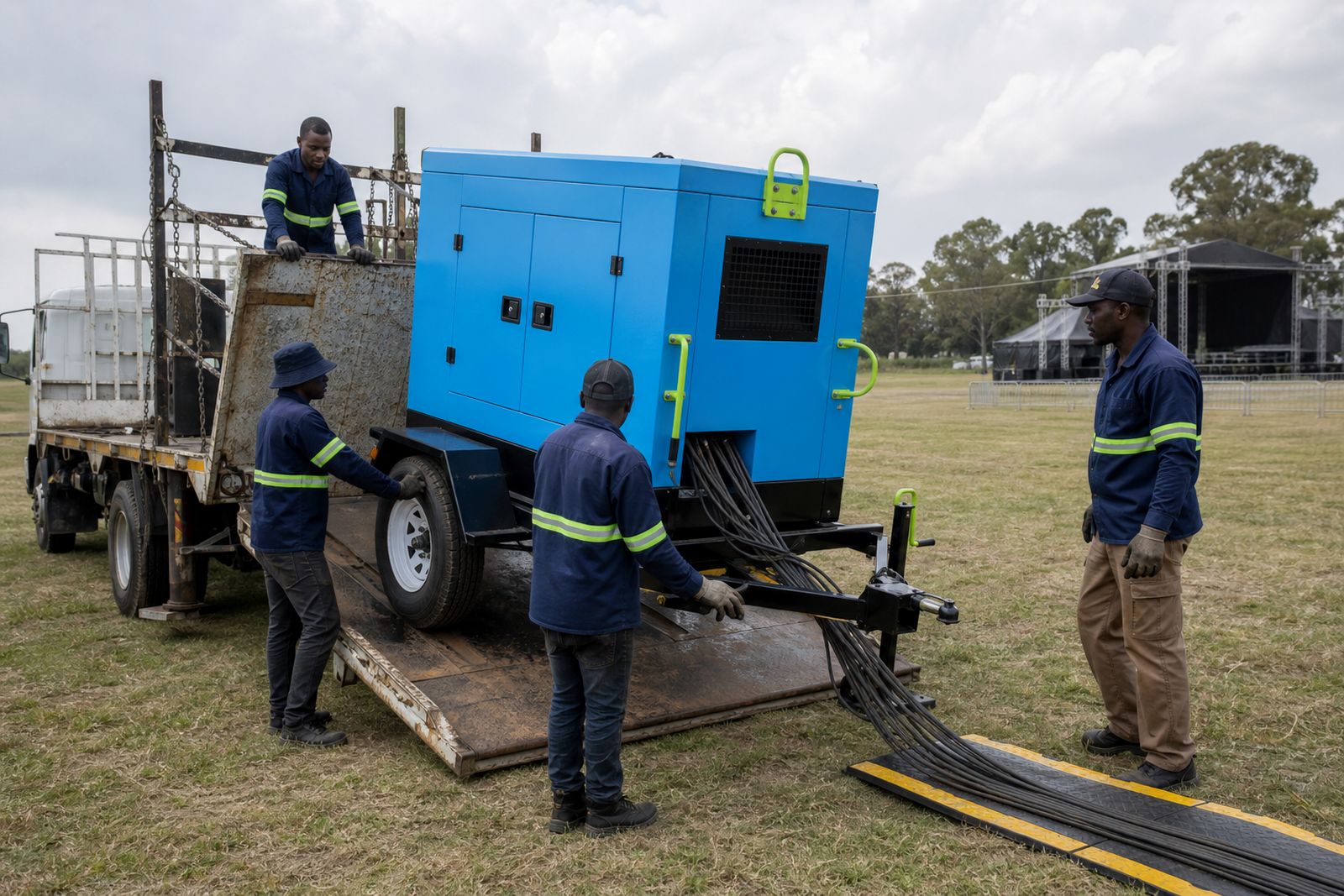
On outdoor sites around Gauteng, uneven ground and vehicle access often decide where a trailer generator can stand. On coastal events, humidity and windblown moisture can affect where connectors and boards should be placed. Keep generators clear of guest spaces, and leave room for refuelling access where required.
- How many boards are needed
- Single-phase and three-phase requirements
- Cable lengths in metres to each zone
- Where ramps are needed over walkways or roads
- Which circuits are critical and which are non-essential
This step is often skipped, then fixed in a rush on site. A basic distribution plan saves a lot of stress.
The checklist to send with your enquiry
If you send a clear load summary through our contact page, we can match the hire setup more accurately. The more complete the information, the easier it is to suggest suitable generators, boards, cable and access requirements. A rough sketch or supplier equipment list is often enough to get started.
Include the venue town, event type and whether it is a one-day function, multi-day festival, film job, building site or standby setup. Also mention access limits such as basements, soft ground, tight gates or shopping centre loading bays. Those details matter as much as the load total.
- Event type and venue location
- Date, setup time and collection timing
- Full equipment list with wattage or kilowatt ratings
- Any items with motors, compressors or pumps
- A sketch showing stage, catering, bars and other zones
- Approximate cable distances in metres
- Whether you need lighting towers, cable ramps or refuelling
- Which loads are essential during a power cut
If you are not sure about part of the list, send what you have. We can help work through it with you and point out common misses, it is much better to ask early than to resize power on the day of the event.
What our Generator Hire customers say
Verified Google reviews
Questions we get asked
What if I do not know the wattage of some items?
Send the equipment description, quantity and what it is used for. Rating plates, spec sheets or supplier schedules help, but if some figures are missing we can help you estimate a practical event load.
Do I need one generator or more than one?
That depends on the total load, the site layout and how critical each area is. Some events are better served by one larger unit, while others work better with separate supplies for stage, catering or standby needs.
Can you help with load planning as well as the hire equipment?
Yes. We help customers work out the expected load and match generators, distribution boards, cable, ramps and site support to the event or temporary site requirement.
Also worth a look
Tell us about the job
Send sizes, materials and where you are through our contact form, and we will come back with the practical options.
Open the contact form