Building and film sites
Need temporary power for a building site, location unit or film set? We hire diesel generators and power-distribution equipment from Kempton Park, with our crew handling delivery, set-up, refuelling and collection.
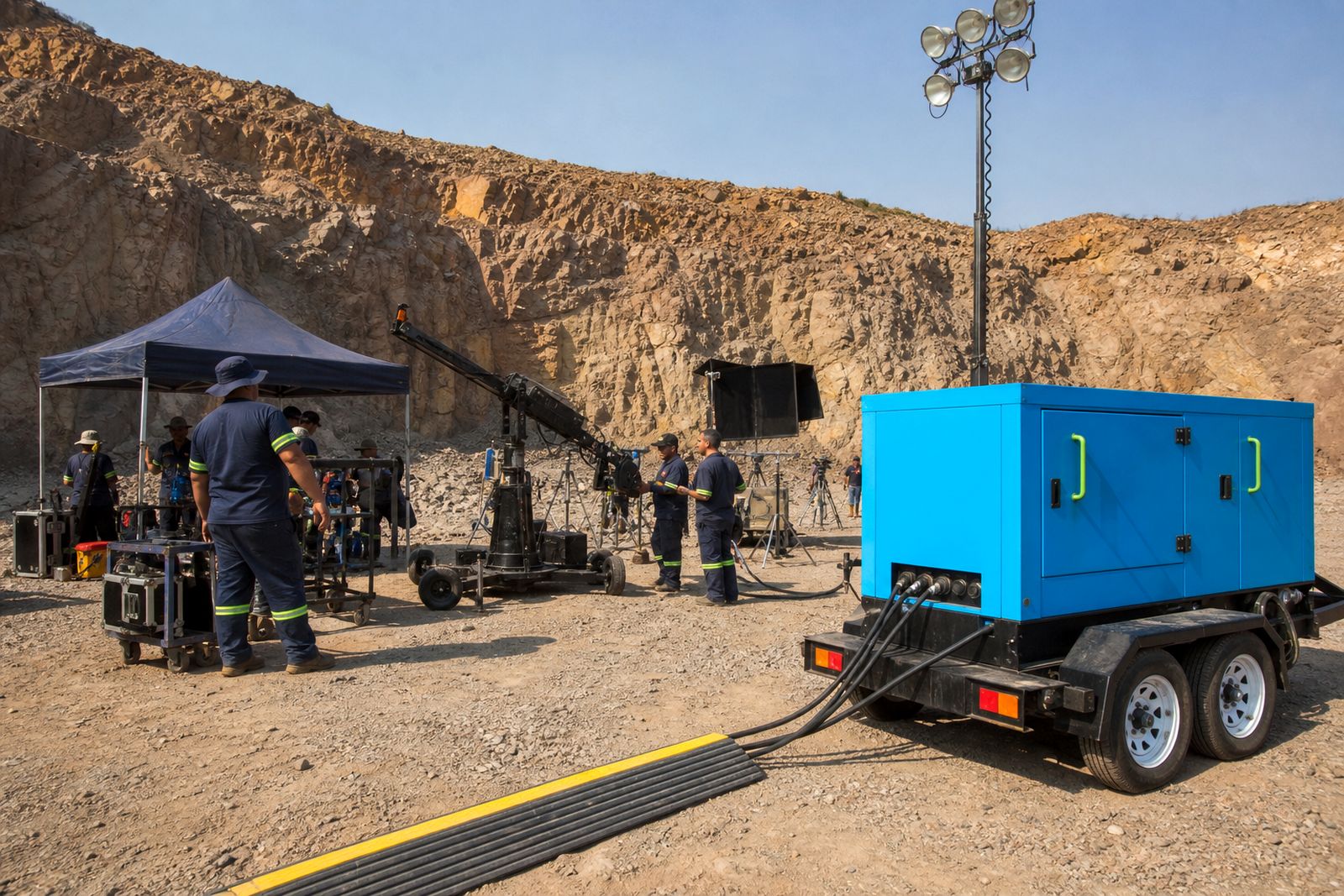
Power hire for working sites and location shoots
Building sites and film locations often need power before a municipal supply is live, or in places where the existing connection is too small for the job. We supply temporary diesel generator hire with distribution boards, cable, cable ramps, lighting towers and fuel support for active work sites, production compounds and short-term units.
This service suits contractors, production managers, location teams and site supervisors who need power for tools, cabins, lighting, charging, catering support and general site use. We can help size the supply for a small crew base or a larger site with mixed loads, and we allow for practical conditions such as mud, dust, long cable runs, night work and changing call times.
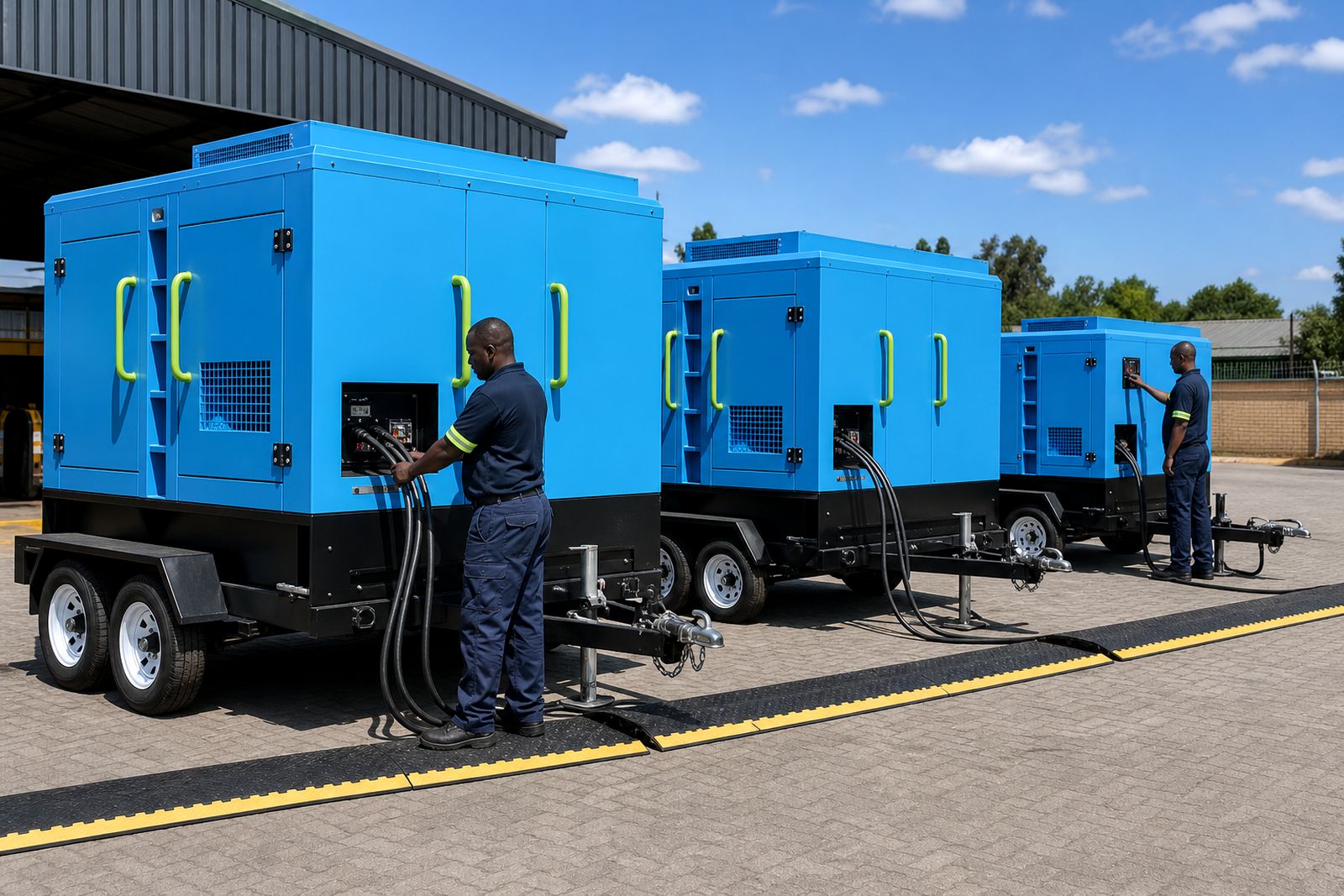
- Silent trailer generators for lower noise on occupied sites and filming locations
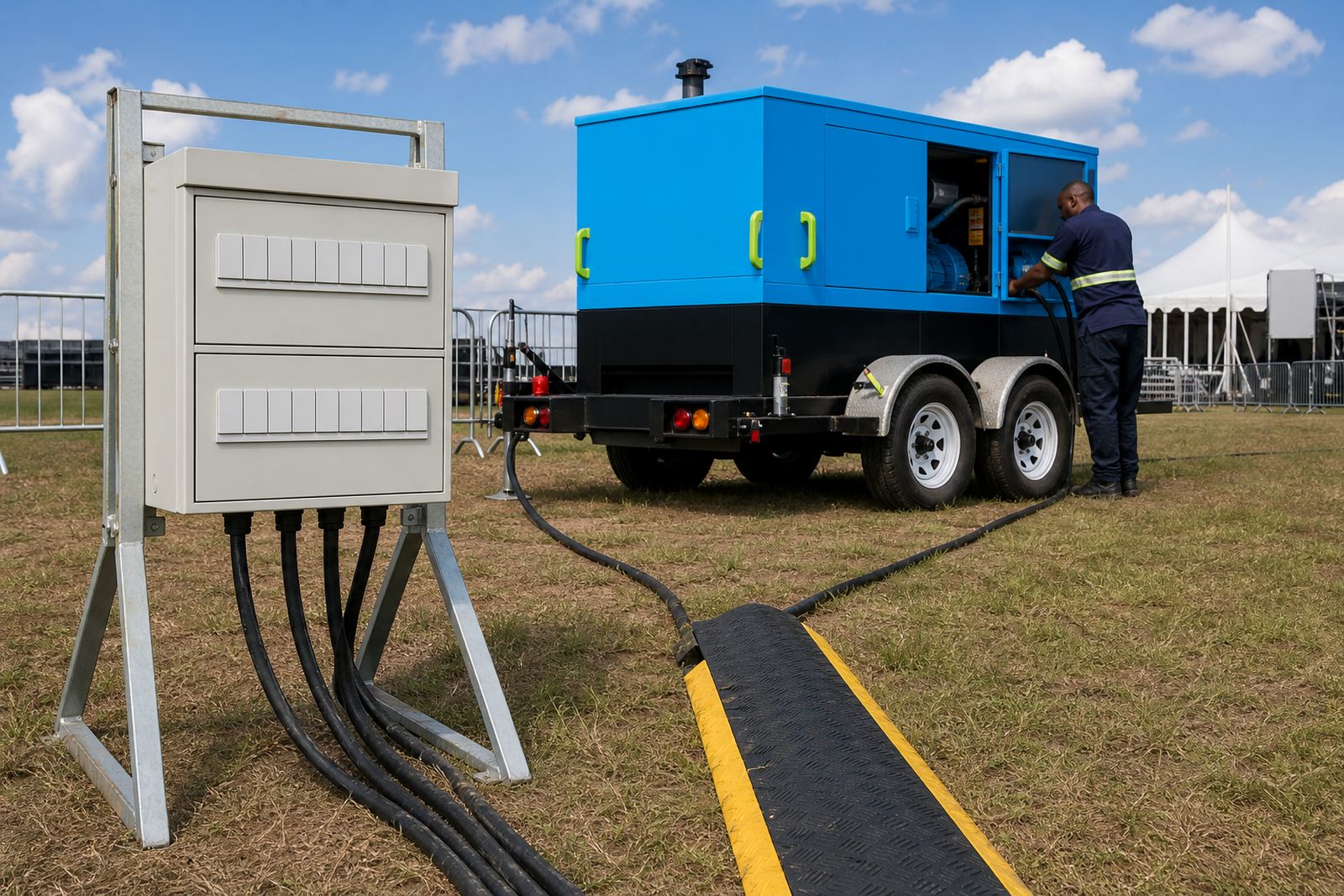
- Mobile distribution boards for splitting supply safely around the site
- Heavy-duty cabling and cable ramps for walkways and vehicle crossings
- Lighting towers for work zones, perimeter areas and early starts
- Refuelling support and fuel-use planning during the hire period
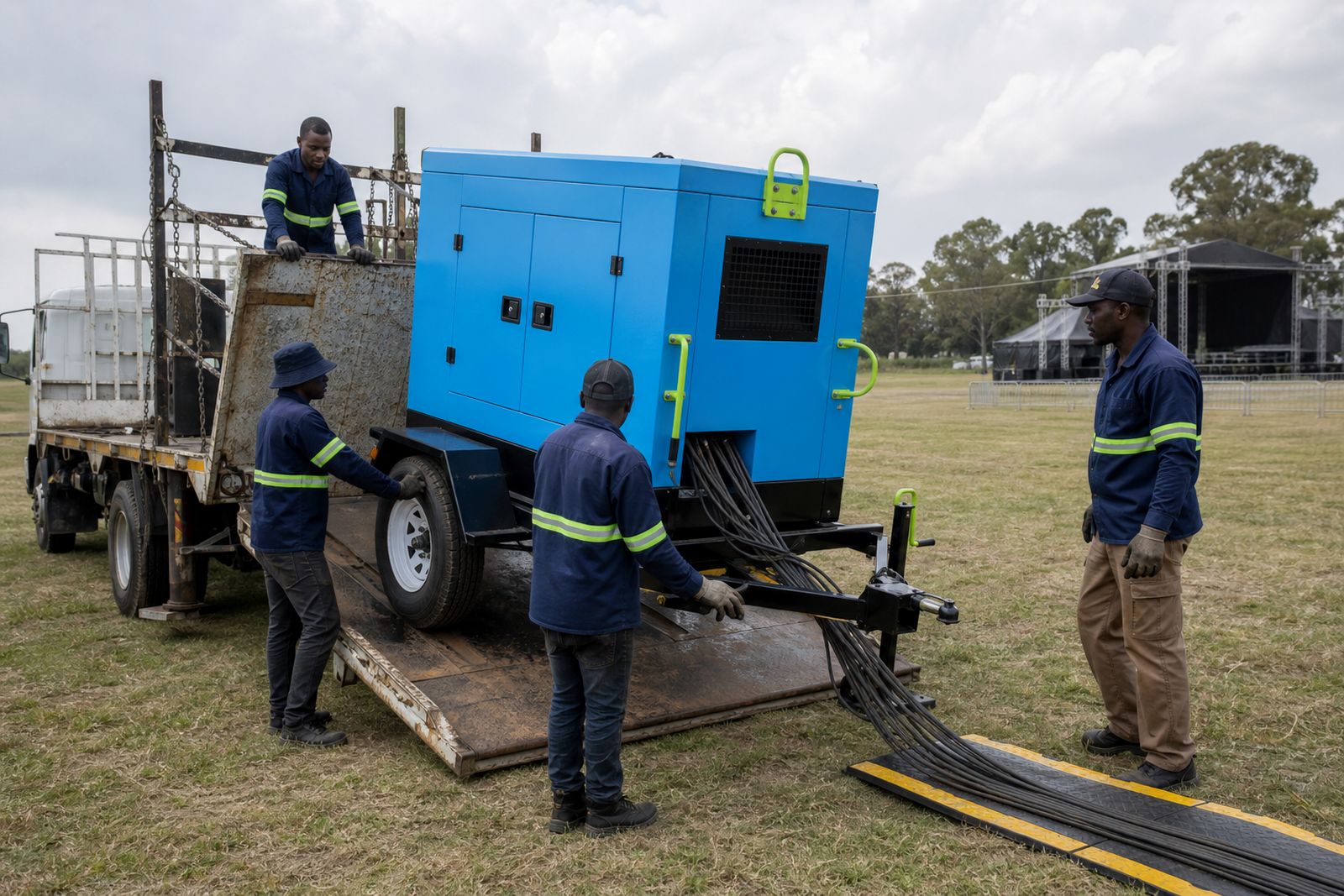
- Delivery, positioning, start-up checks and collection by our crew
What is included in the hire
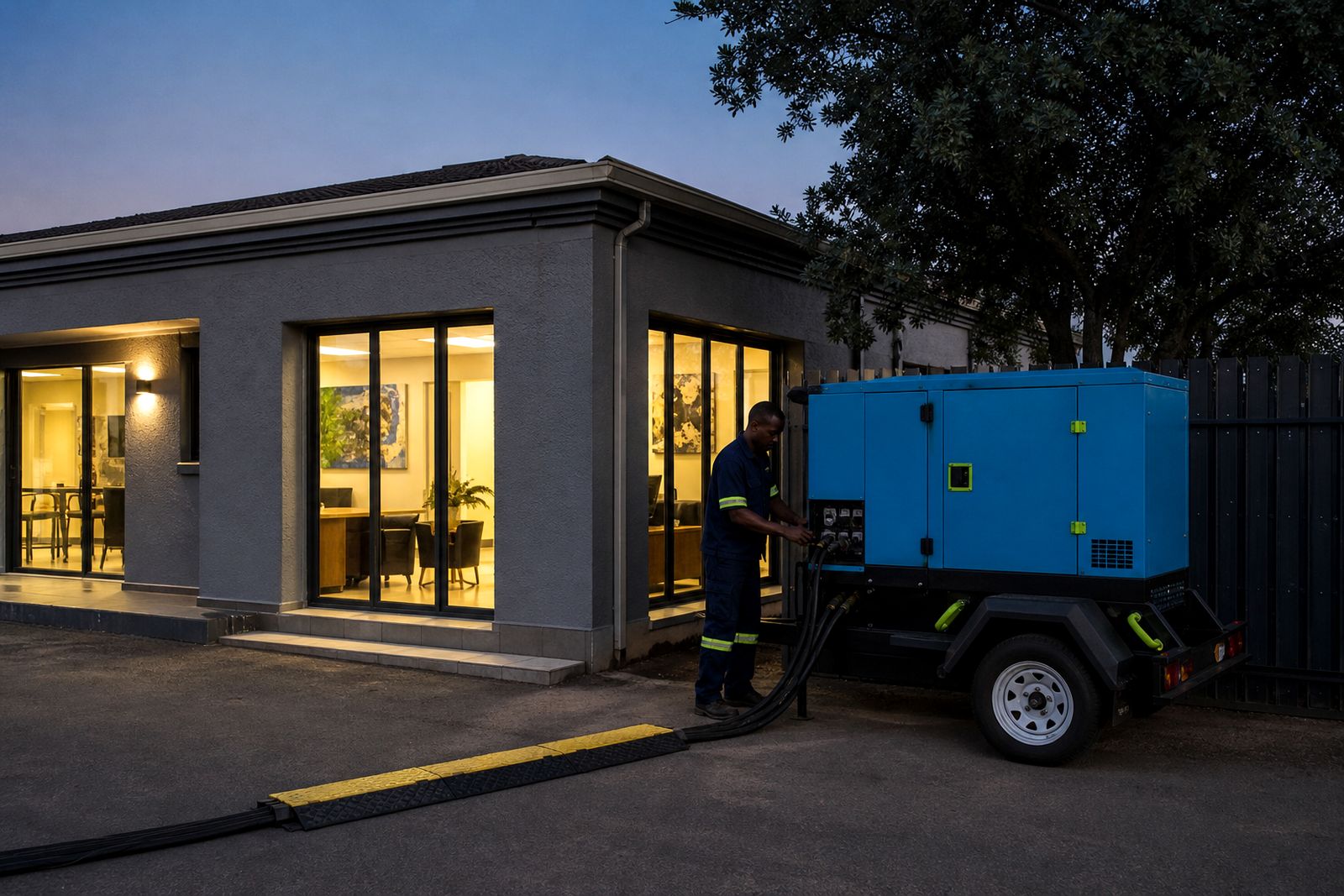
Our hire service is built around temporary site use rather than permanent electrical work. We bring the generator and support equipment to site, position it where access and ventilation are suitable, run out the required cable and connect the distribution equipment agreed for the job. If needed, we also supply cable protection where routes cross pedestrian paths, access roads or working areas.
Typical applications include site cabins, borehole or dewatering pumps, angle grinders, drills, chargers, tower lights, make-up units, wardrobe trailers, catering support and base-camp lighting. On film jobs we also look at noise placement and practical distances from set, because a generator parked too close can become a problem very quickly.
- Generator delivery and collection
- On-site positioning and basic operating briefing
- Distribution boards sized for the planned circuits
- Power cable lengths to suit the layout
- Cable ramps where traffic or foot movement requires protection
- Refuelling visits if the hire runs over longer shifts or overnight
We do not sell generators, provide permanent installation or sell fuel separately. Where a site electrician is involved, we coordinate with them on connection points and load planning.
How the process works step by step
We start with your enquiry through the contact page. Tell us what the power is for, where the site is, what equipment will run at the same time and how long the hire is likely to be. If the job is a film shoot, it helps to explain your call sheet pattern, quiet periods and whether there are sensitive sound takes.
From there we work through the load and the site layout. We look at starting currents for motors and pumps, the number of cabins or work areas, cable distances in metres and whether power must be split across different zones. If access is tight, we also check trailer turning space and ground conditions, because soft ground after rain can catch a crew out.
Once the scope is clear, our crew delivers and sets up the equipment on site. We test operation, confirm distribution routes and hand over to the responsible person on site. During the hire we can return for refuelling or adjustments if the agreed load changes, then collect everything at the end.
- Enquiry with site details and expected load
- Generator and distribution sizing
- Access and placement check
- Delivery and set-up
- Running support and refuelling if required
- Breakdown of the temporary system and collection
What you need to prepare on site
A temporary generator set works best when the site is ready for it. Before delivery, make sure there is clear vehicle access, enough space to position the trailer, and a level area that stays reasonably firm under load. The set must have airflow around it and should not be boxed into a small courtyard or pushed hard against a wall. On film locations, think ahead about where crew walk, where talent waits and where sound is being recorded.
You should also nominate a responsible site contact who can confirm the planned loads and point out any restricted areas. If the generator is supporting cabins or specialist equipment, have the connection points identified in advance. If municipal by-laws, venue rules or estate management conditions apply, those need to be checked before the unit arrives.
- Clear access for delivery vehicles and trailer manoeuvring
- A safe, level standing area for the generator
- A list of tools, cabins, lights or set equipment to be powered
- Expected running hours, including overnight use if any
- Permission for cable routes across shared areas where needed
- Site contact available for handover and collection
How hire pricing is worked out
Hire charges are usually based on the size of generator needed, the type and quantity of distribution equipment, the cable lengths, site location and how long the equipment is required for. A small unit supplying a few essentials is a different job from a larger temporary supply feeding multiple cabins, pumps and lights across a spread-out site.
Access conditions also matter. Long cable routes, after-hours delivery, difficult positioning, repeated refuelling visits and travel beyond Gauteng all affect the overall cost. For film work, pricing can also depend on standby time versus actual run time, because some units may need to be available on location even during quieter periods. We will explain the practical basis of the quote so you can see what is driving the cost, not just the generator size.
Fuel use is linked to load and running hours, so accurate information from the site helps keep the hire properly matched. Oversizing can waste fuel while undersizing can trip the supply or struggle with motor starts, so it's worth getting the load list right from the start.
Aftercare, support and typical equipment specs
Once the unit is on hire, we remain available for operational support related to the temporary setup we supplied. If your load changes, an extra cabin arrives or a shoot moves to a different section of the property, let us know early so we can check whether the existing setup still suits the job. A small change on paper can become a big draw on site, and it is better to fix that before the evening shift starts.
Our crew can return for planned refuelling and collection, and we leave the site cleared of hired equipment at the end of the job. For coastal work or damp weather, we take extra care with cable routing and equipment placement, and on dusty inland sites we check that ventilation around the set stays open. Temporary power on a busy site is never fully hands-off, but with proper planning it runs cleanly and without fuss.
Typical hire range includes silent diesel units from about 20 kVA to 200 kVA, with trailer-mounted options for easier movement. Distribution boards are commonly configured for single-phase and three-phase use, and cable runs are planned to suit the layout rather than forcing everything into one area.
What our Generator Hire customers say
Verified Google reviews
Questions we get asked
Can you help us work out what generator size we need for a site?
Yes. We look at the equipment you need to run, what starts together, cable distances and whether there are motors or pumps with higher start-up demand. That helps us size the generator and the distribution properly.
Do you connect into permanent building wiring?
No. We provide temporary generator and power-distribution hire only. We do not do permanent electrical installation, but we can coordinate with the responsible electrician or site team on the temporary setup.
Can you supply power for overnight work or load-shedding backup on site?
Yes, if the hire scope allows for the running hours and fuel planning. Let us know whether the unit must run continuously, cover night shifts or stand by for outages so we can plan the equipment and refuelling correctly.
Also worth a look
Tell us about the job
Send sizes, materials and where you are through our contact form, and we will come back with the practical options.
Open the contact form