Portable and small generators
Portable and small generators are a practical choice when you need modest power without bringing in a larger trailer unit. We help match the generator to the load for stalls, kiosks, tools, filming support and small event areas across Gauteng and beyond.
What these generators are used for
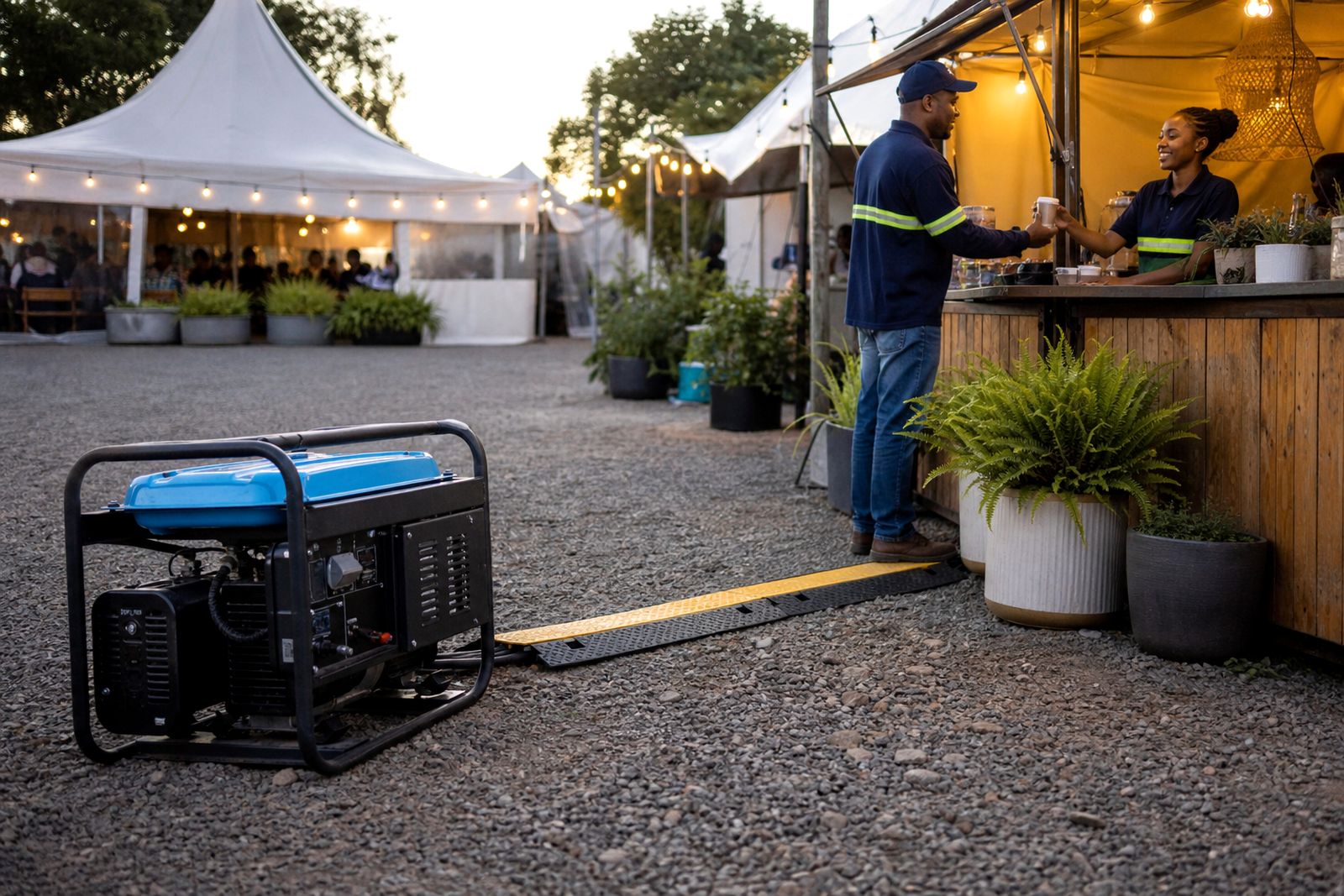
Our portable and small generators cover lower power demand where a full trailer generator would be oversized. They are commonly hired for market stalls, small catering points, temporary kiosks, gate control, light site work, filming support, outdoor activations and backup for a few essential items during power cuts. They are also useful where access is tight and equipment must be moved closer to the point of use.
These units are for temporary supply only. We do not sell generators, we do not do permanent electrical installation, and we do not supply fuel as a retail product. If your event or site also needs cabling, socket breakout, cable ramps or a larger distribution point, we can include that in the hire and set-up plan.
- Suitable for short runs of modest equipment
- Useful where access is limited or ground space is small
- Often paired with basic distribution and extension cable
- Can support one area instead of powering a whole event
Typical sizes and realistic working limits
Portable units are usually chosen in the lower kVA range. As a guide, the most common hires sit around 2 kVA to 8 kVA depending on the start-up load and the type of equipment connected. A small sound point, till system, lights for one stall and a fridge may suit a compact set, while multiple fridges, urns, pumps or power tools will often need a bigger unit or separation across circuits.
The working limit matters more than the headline size. Motors, compressors, pumps, fridges and some catering gear draw more current when starting. Resistive items such as kettles, fryers and heaters can also push a small generator hard very quickly. It is better to leave headroom than to run a unit flat out all day, especially in summer heat.
- About 2 kVA to 3 kVA: phone charging, lights, tills, routers, small electronics
- About 5 kVA to 6 kVA: mixed stall loads, light refrigeration, small pumps, light tools
- About 7 kVA to 8 kVA: heavier mixed loads, multiple circuits, some small site support
- Not ideal for large stage power, whole-venue supply or heavy welding loads
Where portable sets suit best
Small generators are most useful when the load is localised and the cable run is sensible. For a food stall line, vendor village, ticket point, small wedding service area, security check point or a light-duty site cabin, a portable set can be more practical than a larger machine. They also work well as a separate supply for a specific function so that one fault or overload does not affect the main event power.
Across Gauteng we often see these used for outdoor events in parks, sports grounds, estates and temporary venues where municipal or venue power is too far away or not reliable during load-shedding periods. They can also support film and photo work where one small area needs its own quiet supply.
They do have limits. If you need very low noise close to guests, long overnight running without refuelling, large three-phase equipment, or a broad distribution network across many users, a silent trailer generator is usually the better option. We will tell you plainly if the smaller route is not the right fit.
Site requirements and set-up basics
A portable generator still needs a proper position and safe cable routing. The unit should stand on firm level ground with space around it for ventilation and service access. Exhaust must point away from people, marquees, doors and air intakes. In wet weather, the generator itself must stay protected in a suitable way without blocking cooling airflow. Never place a running unit inside a room, tent or container.
For event and site work we also look at the route from generator to load. Long cable runs can affect performance if the cable is undersized, so tell us the distance in metres where you can. If pedestrians or vehicles cross the run, cable ramps may be needed. On estates, pavements or municipal spaces there may also be rules on noise, access and positioning.
- Firm level ground, not loose mud or deep sand
- Good airflow and clear exhaust direction
- Dry operating position with weather planning
- Safe cable route with ramps where crossings are needed
- Access for drop-off, collection and refuelling if required
Looking after the unit during hire
Our crew handles delivery, set-up guidance and collection, and we can arrange refuelling support where the run time and usage call for it. During the hire, the main care points are to keep the load within the agreed range, avoid ad hoc extra appliances, and keep the area around the machine clear. If a breaker trips or a unit appears overloaded, switch off connected items and let us know what was added.
On coastal jobs or in damp weather, keep plugs and joints off wet ground and avoid trailing connectors through standing water. On dusty sites, leave enough room around the generator so cooling air is not blocked. A small unit can work very well if it is not cramped, overloaded or moved around while hot.
We do not advise makeshift changeovers into a building supply. For standby during power cuts, tell us exactly what must stay on and whether it plugs in directly or needs a qualified electrician on your side to prepare a compliant temporary connection point.
What to tell us when you enquire
The fastest way to size a portable generator properly is to give us a short list of what will be connected, plus where and for how long. You can contact us through the enquiry form on our contact page and we will help work through the load. If you are not sure about watts or amps, send clear photos of the equipment labels where possible and we can work from that.
Please include the practical details too, because access and cable layout often decide whether a portable unit is suitable or whether a silent trailer set would be the safer choice.
- Venue or site location, including Kempton Park, East Rand or elsewhere in Gauteng
- Type of event or work: stall, wedding area, filming support, tools, standby
- List of equipment with power ratings, start-up loads if known
- Single-phase or three-phase requirement if applicable
- Distance from generator position to the furthest item
- Ground conditions, steps, narrow gates or basement access
- Running hours per day and whether overnight use is needed
- Any need for cable ramps, basic distribution or lighting support
A clear load list saves time and avoids under-sizing, which is the main cause of nuisance trips on smaller sets. If in doubt tell us more rather than less, it helps.
What our Generator Hire customers say
Verified Google reviews
Questions we get asked
Can a small generator run catering equipment?
Sometimes, but it depends on the exact items. Urns, fryers, kettles and fridges can draw more than people expect, especially at start-up. Send the rating plate details and we will advise whether a portable unit has enough headroom.
Are portable generators quiet enough for weddings or guest areas?
They can suit some wedding support loads if positioned carefully, but they are not always the best choice close to seated guests. If noise is critical, a silent trailer generator placed further away is often the better option.
Do you connect the generator into my building during load-shedding?
We hire temporary power equipment and can advise on the generator side, but we do not do permanent electrical installation. If your building needs a prepared changeover or connection point, that must be handled by a qualified electrician on your side.
Also worth a look
Tell us about the job
Send sizes, materials and where you are through our contact form, and we will come back with the practical options.
Open the contact form